Search GrowthX Learning Content


Green Finance and ESG Compliance in BFSI Sector
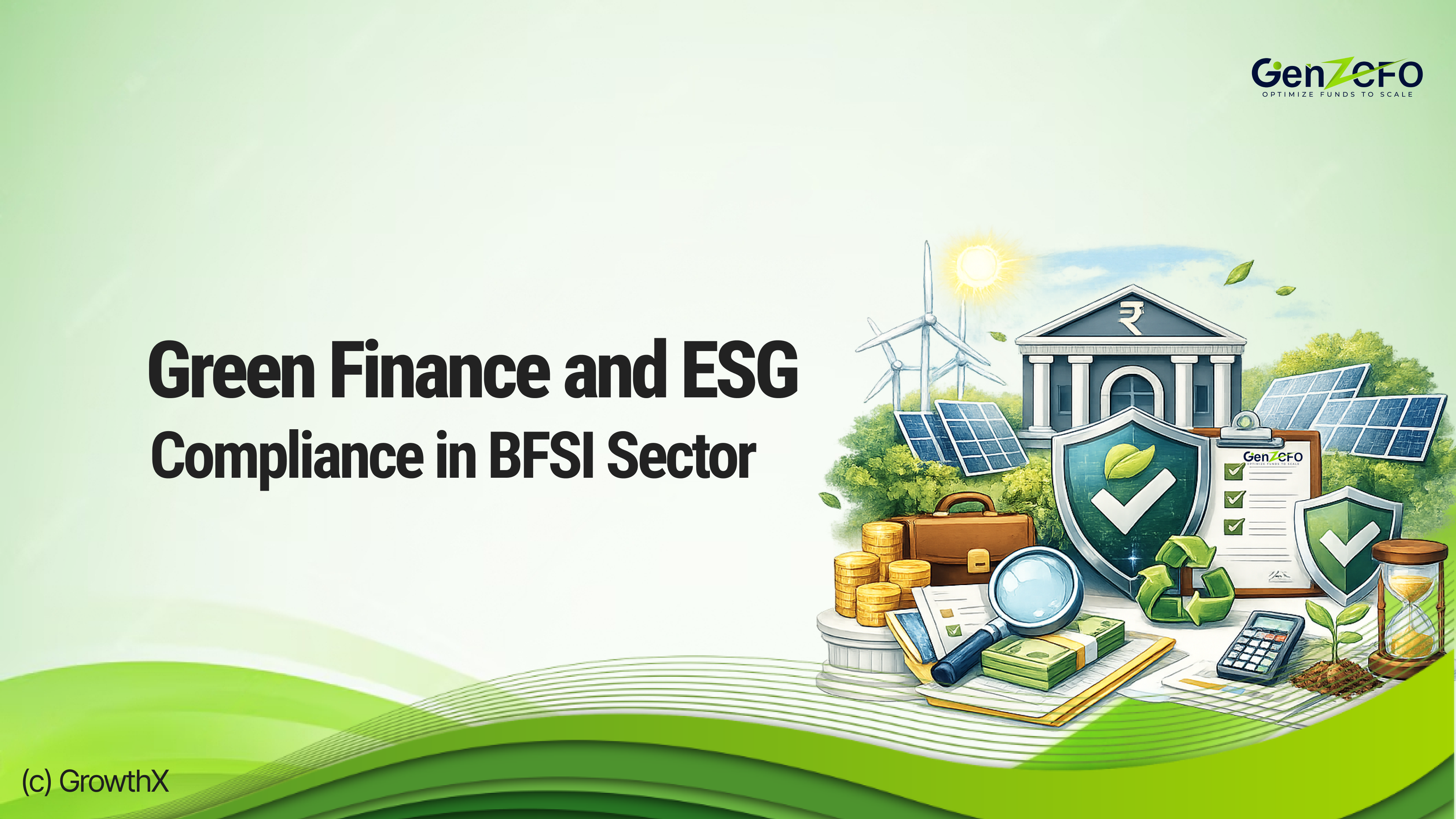
The BFSI sector, which includes banking, financial services and insurance, is one of the most important pillars of the Indian economy. Banks provide credit, NBFCs support businesses and retail borrowers, insurance companies manage financial risks, and investment institutions help companies raise capital. Since this sector controls the flow of money, it has a major responsibility in supporting sustainable and responsible economic growth.
Green finance and ESG compliance are now becoming essential for BFSI institutions. Green finance means providing funds for projects that support environmental protection, such as renewable energy, electric vehicles, waste management and green infrastructure. ESG compliance means following standards related to environment, social responsibility and good governance. Today, BFSI companies must not only check profit, repayment capacity and creditworthiness, but also assess whether a business is environmentally responsible, socially fair and properly governed before lending, investing or offering financial products.
In this article, CA Manish Mishra talks about Green Finance and ESG Compliance in BFSI Sector.
Meaning of Green Finance in BFSI Sector
Green finance refers to loans, investments, deposits, bonds or financial products used for environmentally beneficial activities. These activities may include renewable energy, solar power, wind energy, electric vehicles, green buildings, sustainable agriculture, water conservation, waste management, pollution control and energy-efficient projects. For banks, green finance may include green home loans, solar project loans, electric vehicle loans and credit facilities for sustainable infrastructure.
For NBFCs, it may include financing electric vehicles, rooftop solar panels, energy-efficient machinery and MSME sustainability upgrades. For insurance companies, green finance may include climate-risk insurance, crop insurance and insurance products for renewable energy projects. In simple words, green finance helps money move towards activities that support environmental protection and climate responsibility.
Meaning of ESG Compliance in BFSI Sector
ESG stands for Environmental, Social and Governance. ESG compliance means that a business follows responsible standards in these three areas. The environmental part focuses on climate risk, carbon emissions, energy use, pollution control, water management, waste reduction and green lending. The social part focuses on customer protection, employee welfare, data privacy, fair lending, financial inclusion and community impact. The governance part focuses on board responsibility, transparency, internal controls, ethical conduct, risk management and regulatory compliance.
For BFSI institutions, ESG compliance is not limited to their own office operations. They also need to check the ESG performance of borrowers, investee companies, vendors and business partners. For example, if a bank gives a loan to a company that is violating pollution norms, the bank may indirectly carry environmental and credit risk.
Why Green Finance is Important for BFSI Sector?
Green finance is important because climate change is now a financial risk. Floods, heatwaves, droughts, cyclones, pollution restrictions and changing environmental rules can affect business performance. When businesses suffer, banks and NBFCs may face repayment issues.
For example, if a factory is closed due to environmental violations, it may not be able to repay its loan on time. If a real estate project does not follow green building norms or environmental approvals, it may face delays and penalties. If an insurance company does not properly assess climate risk, it may face higher claims after natural disasters. Therefore, green finance helps BFSI institutions reduce long-term financial risk. It also creates new business opportunities in renewable energy, electric mobility, sustainable housing, waste management and climate-resilient infrastructure.
ESG Compliance as a Risk Management Tool
ESG compliance is not only about reputation. It is also a risk management tool. A borrower with poor environmental compliance may face penalties. A company with poor labour practices may face disputes and legal action. A company with weak governance may face fraud, fund diversion or regulatory investigation. Banks and financial institutions need to identify these risks before giving loans or making investments.
ESG due diligence helps lenders understand whether the borrower’s business is sustainable and legally compliant. For example, before financing a manufacturing unit, a bank may check pollution control approvals, factory safety compliance, waste management systems, labour law compliance and governance documents. This gives a clearer picture of the borrower’s actual risk profile.
Role of Banks in Green Finance
Banks are the biggest drivers of green finance in the BFSI sector. They provide credit to industries, infrastructure projects, MSMEs, individuals and government-backed projects. By giving priority to green projects, banks can support sustainable economic growth. Banks can introduce special loan products for solar panels, electric vehicles, green homes and energy-efficient equipment. They can also offer lower interest rates or better repayment terms for projects with strong environmental benefits.
At the same time, banks must be careful while lending to industries with high environmental risk. Sectors such as coal, mining, chemicals, heavy manufacturing and construction may require deeper ESG checks. The aim is not to stop financing completely, but to ensure that proper compliance and risk controls are in place.
Role of NBFCs in Green Finance
NBFCs are very important for green finance because they reach customers and businesses that may not always get easy access to traditional banking. Many NBFCs finance vehicles, MSMEs, equipment, housing and infrastructure. NBFCs can support green finance by funding electric vehicles, battery storage, rooftop solar, green housing, sustainable agriculture equipment and energy-saving machinery. They can also help small businesses shift towards cleaner technology.
Since NBFCs often deal with smaller borrowers, they should use simple ESG checklists. These checklists can cover pollution compliance, safety practices, business licenses, repayment capacity, energy use and basic governance standards.
Role of Insurance Companies in ESG Compliance
Insurance companies are directly affected by climate-related risks. Natural disasters, floods, storms, heatwaves and crop failures can increase insurance claims. Therefore, ESG compliance is very important for the insurance sector. Insurance companies need to improve climate-risk assessment while issuing policies. They can design products for crop protection, renewable energy projects, disaster protection and climate-resilient infrastructure. They can also encourage customers to adopt safer and greener practices.
For example, an insurance company may offer better terms for buildings with fire safety systems, energy-efficient designs and disaster-resistant construction. Similarly, insurers may support renewable energy businesses by offering project insurance and risk coverage.
Role of Mutual Funds and Investment Institutions
Mutual funds, portfolio managers, alternative investment funds and investment advisers also play an important role in ESG finance. Investors are increasingly interested in companies that follow responsible business practices. Investment institutions can create ESG-focused funds and invest in companies with better environmental, social and governance performance.
However, they must be transparent about their investment strategy. They should clearly explain whether they are investing in low-carbon companies, socially responsible companies, companies with strong governance or specific sustainability themes. The biggest responsibility of investment institutions is to avoid greenwashing. They should not market a fund as ESG-friendly unless the investment selection process actually follows ESG principles.
Green Deposits in BFSI Sector
Green deposits are deposits collected by banks or eligible financial institutions for financing green activities. These deposits are useful because customers who want to support sustainable development can place their money in green deposit products. The institution accepting green deposits must use the money for eligible green projects.
It should also have proper internal policies, tracking systems and reporting mechanisms. This ensures that the money collected from customers is not used for ordinary lending without environmental benefits. Green deposits can support renewable energy, clean transport, water management, pollution prevention, green buildings and climate adaptation projects.
Green Bonds and Sustainable Finance Instruments
Green bonds are debt instruments used to raise money for green projects. When a company, bank or government issues a green bond, the funds are used for environmentally beneficial purposes. Apart from green bonds, the BFSI sector may also use sustainability-linked loans, ESG funds, transition finance, climate bonds and green securitisation. These instruments help mobilise large amounts of capital for sustainable development.
Green bonds are especially useful for infrastructure projects because such projects usually require long-term funding. Renewable energy plants, metro projects, water treatment systems, waste management plants and green housing projects can benefit from green bond financing.
ESG Due Diligence Before Lending
ESG due diligence means checking environmental, social and governance risks before approving a loan or investment. This process helps BFSI institutions avoid future losses. In environmental due diligence, lenders may check pollution control approval, environmental clearance, waste disposal system, water usage and energy consumption. In social due diligence, they may check labour practices, employee safety, customer complaints and community impact.
In governance due diligence, they may check board structure, financial transparency, related-party transactions and litigation history. A strong ESG due diligence process improves loan quality. It also protects banks and NBFCs from financing businesses that may later face legal or regulatory problems.
ESG Reporting in BFSI Sector
ESG reporting means disclosing information about environmental, social and governance performance. For BFSI companies, ESG reporting may include details on carbon footprint, green lending portfolio, employee diversity, customer complaints, data security, risk management, board structure and ethical conduct.
Good ESG reporting helps investors, customers and regulators understand how responsibly a financial institution is operating. It also improves trust and transparency. BFSI companies should avoid making vague claims. Instead of simply saying “we support sustainability,” they should provide clear information about green finance products, ESG policies, risk management systems and measurable outcomes.
Greenwashing Risk in BFSI Sector
Greenwashing is one of the biggest risks in green finance. It means presenting a product, project or institution as environmentally friendly when it is not truly green. For example, if a bank promotes a green deposit scheme but uses the funds for normal commercial lending, it may be greenwashing. If an investment fund claims to be ESG-focused but invests mainly in companies with poor sustainability records, it may mislead investors.
To avoid greenwashing, BFSI institutions should maintain proper documentation, internal approvals, third-party verification, fund-use tracking and transparent reporting. Claims made in marketing material should match actual practices.
Benefits of Green Finance for BFSI Sector
Green finance provides several benefits to BFSI institutions. It helps them reduce long-term climate-related financial risk. It improves brand reputation and investor confidence. It also creates opportunities in new sectors such as renewable energy, electric vehicles, green housing and sustainable infrastructure.
Green finance also helps financial institutions attract responsible customers and global investors. Many institutional investors prefer businesses that follow strong ESG standards. Therefore, BFSI companies with good ESG practices may get better access to capital. Another major benefit is regulatory preparedness. Institutions that start early will find it easier to comply with future ESG and climate-risk requirements.
Challenges in ESG Compliance for BFSI Sector
Even though ESG compliance is important, BFSI institutions face many practical challenges. One major challenge is lack of reliable ESG data. Many borrowers, especially MSMEs, do not maintain detailed environmental or social records.
Another challenge is the cost of ESG implementation. Reporting, audits, data systems, employee training and third-party verification can be expensive. Smaller institutions may find it difficult to build a full ESG team. There is also a lack of uniform understanding. Different institutions may classify green activities differently. This can create confusion and increase the risk of greenwashing.
How BFSI Companies Can Strengthen ESG Compliance
BFSI companies should start by creating a clear ESG policy approved by senior management or the board. The policy should explain ESG goals, green finance criteria, risk assessment process, reporting responsibility and monitoring system.
They should also include ESG checks in loan appraisal, investment decisions, vendor selection and product design. Employees should be trained to identify climate risk, governance concerns and social compliance gaps. Technology can also help. Digital dashboards, ESG scoring tools, climate-risk models and automated reporting systems can make ESG compliance easier and more reliable.
Importance of Board and Management Oversight
ESG compliance should not remain only with the compliance department. The board and senior management must actively supervise ESG strategy. They should review ESG risks, approve policies, monitor green finance exposure and ensure proper disclosure.
Strong governance is the foundation of ESG compliance. If governance is weak, environmental and social commitments may remain only on paper. Therefore, BFSI entities must create accountability at the leadership level. The board should also ensure that ESG goals are practical and measurable. Unrealistic promises may create reputational and legal risk.
Green Finance and Financial Inclusion
Green finance can also support financial inclusion. Small farmers, rural entrepreneurs, MSMEs and low-income households can benefit from affordable green finance products. For example, loans for solar pumps can help farmers reduce electricity dependence. Loans for electric rickshaws can support small transport operators.
Green home loans can help families build energy-efficient houses. Financing for clean cooking solutions can improve health and quality of life. Therefore, green finance is not only for large companies. It can also support inclusive and sustainable development at the grassroots level.
Future of Green Finance in BFSI Sector
The future of green finance in the BFSI sector is very strong. India is moving towards renewable energy, electric mobility, sustainable infrastructure and climate-resilient development. These goals will require large financial support from banks, NBFCs, insurance companies and capital market institutions. In the coming years, ESG compliance may become a normal part of credit appraisal, investment analysis, insurance underwriting and corporate reporting.
Financial institutions that adopt ESG early will be better prepared for future regulatory and market expectations. Green finance will also become a competitive advantage. Customers, investors and regulators will prefer institutions that can show responsible lending, transparent reporting and long-term sustainability.
Conclusion
Green finance and ESG compliance are becoming essential for the BFSI sector. They are not only about environmental protection but also about financial stability, risk management, regulatory readiness and responsible business growth.
Banks, NBFCs, insurance companies and investment institutions have the power to guide capital towards sustainable activities. By financing green projects and following ESG standards, the BFSI sector can support India’s transition towards a cleaner and more resilient economy. For BFSI companies, the right approach is to create strong ESG policies, assess climate-related risks, improve disclosures, train teams and avoid greenwashing. Institutions that take ESG seriously today will be more trusted, more resilient and better prepared for the future.
Frequently Asked Questions (FAQs)
Q1. What is green finance in BFSI sector?
Ans. Green finance means providing loans, investments or financial products for projects that benefit the environment. In the BFSI sector, it includes funding renewable energy, electric vehicles, green buildings, water conservation, waste management and sustainable infrastructure.
Q2. What is ESG compliance?
Ans. ESG compliance means following environmental, social and governance standards. It covers areas such as climate responsibility, employee welfare, customer protection, transparency, risk management and ethical governance.
Q3. Why is ESG important for banks?
Ans. ESG is important for banks because environmental and governance risks can affect borrower repayment capacity. If a borrower faces pollution penalties, legal action or business closure, the bank may also face loan recovery problems.
Q4. How can NBFCs support green finance?
Ans. NBFCs can support green finance by funding electric vehicles, rooftop solar panels, energy-efficient equipment, green housing and sustainable MSME projects. They can also use simple ESG checks before lending.
Q5. What is greenwashing?
Ans. Greenwashing means falsely presenting a product, company or project as environmentally friendly. In BFSI, this may happen when a financial product is marketed as green but the funds are not actually used for green purposes.
Q6. How does ESG help investors?
Ans. ESG helps investors understand whether a company is responsible and sustainable. Companies with better ESG practices may have lower long-term risk, better governance and stronger public trust.
Q7. What are green bonds?
Ans. Green bonds are debt instruments used to raise funds for environmentally beneficial projects. The money raised through green bonds is generally used for renewable energy, clean transport, water management, waste management and green infrastructure.
Q8. What are the main challenges in ESG compliance?
Ans. The main challenges include lack of ESG data, high compliance cost, shortage of trained professionals, unclear classification of green activities and risk of greenwashing.
Q9. How can BFSI companies avoid greenwashing?
Ans. BFSI companies can avoid greenwashing by maintaining proper records, tracking use of funds, verifying green claims, preparing transparent reports and ensuring that marketing statements match actual practices.
Q10. What is the future of ESG in BFSI?
Ans. The future of ESG in BFSI is very strong. ESG checks may become a regular part of lending, investment, insurance and reporting. Institutions that adopt ESG early will be better prepared for future compliance and market expectations.
- 03 Jun, 2026
 CA Manish Mishra
- Easing Finance
CA Manish Mishra is the Co-Founder & CEO at GenZCFO. He is the most sought professional for providing virtual CFO services to startups and established businesses across diverse sectors, such as retail, manufacturing, food, and financial services with over 20 years of experience including strategic financial planning, regulatory compliance, fundraising and M&A.