Search GrowthX Learning Content


Incorporating in Delaware vs Singapore: What Founders Should Know

Incorporation goes far beyond a legal requirement; it sets the foundation for how a business is perceived, managed, and scaled over time. It strongly influences investor confidence, with venture capitalists often favoring Delaware C-corporations for their predictable legal framework under the DGCL and specialized Court of Chancery. In Asia, Singapore’s Private Limited (Pte. Ltd.) companies inspire similar confidence because of their global reputation, strong governance standards, and ease of doing business. Taxation is another deciding factor Delaware corporations are subject to federal and state taxes but benefit from founder-friendly provisions like the 83(b) election and QSBS exemption, whereas Singapore offers a flat 17% corporate tax, start-up tax relief, and no capital gains tax, significantly reducing the effective burden.
Compliance and long-term flexibility also differ between the two hubs. Delaware companies must file annual reports, pay franchise tax, and comply with both state and federal regulations, which can be costly but ensures alignment with U.S. investor expectations and IPO readiness. In contrast, Singapore requires annual filings with ACRA, maintenance of registers, and audits unless exempt as a “small company,” balancing compliance with efficiency. Both Delaware and Singapore allow re-domiciliation, ensuring mobility as businesses expand globally. Ultimately, Delaware offers unmatched access to U.S. capital markets, while Singapore serves as a strategic gateway to Asia-Pacific, each with unique statutes and compliance obligations.
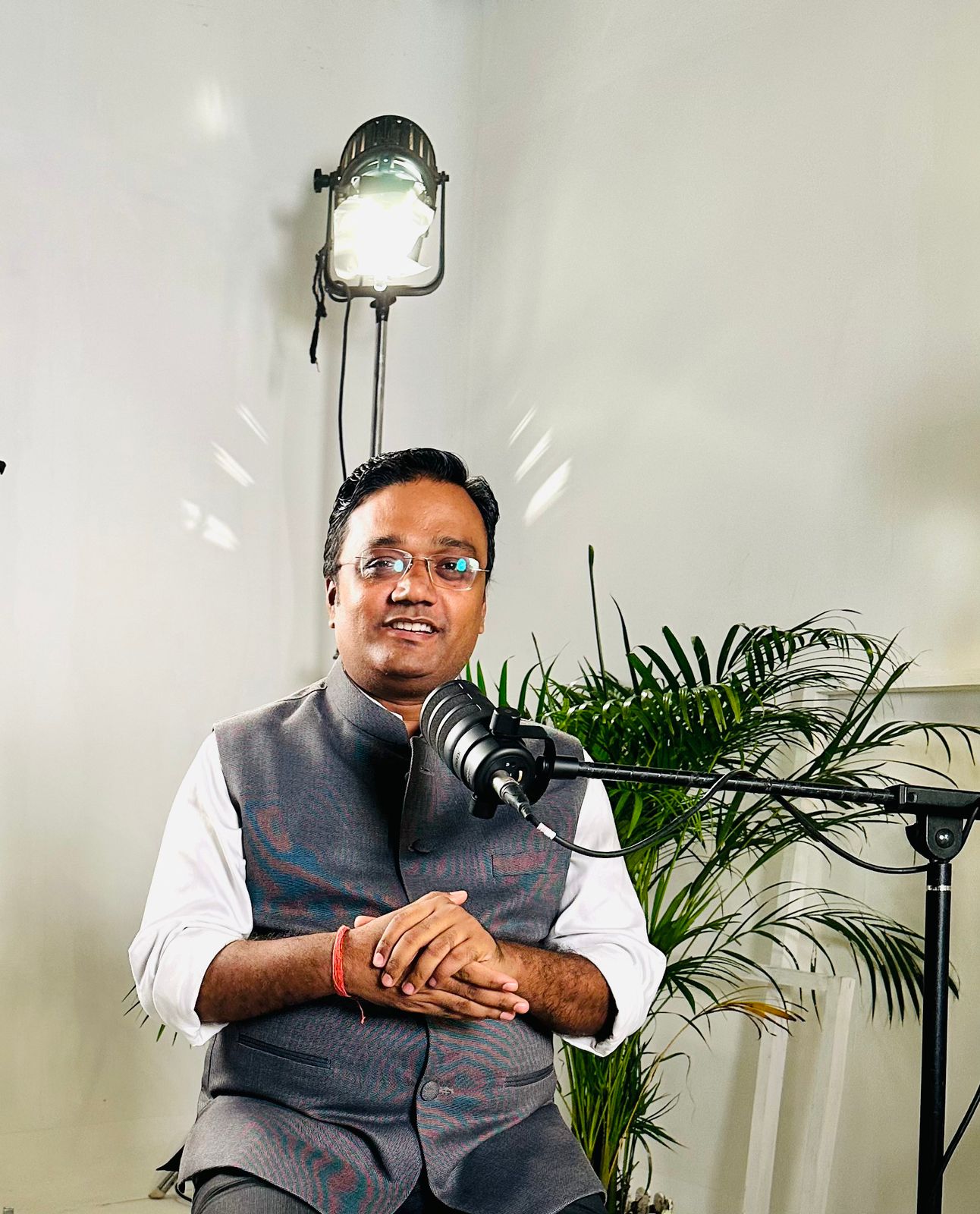
In this article, CA Manish Mishra talks about Incorporating in Delaware vs Singapore: What Founders Should Know.
Delaware Incorporation
Legal Framework and Governance
Statute: Delaware General Corporation Law (DGCL)
The DGCL is one of the most advanced corporate statutes in the U.S. It gives companies flexibility in structuring governance, issuing shares, and managing mergers, while protecting shareholder rights. Its long history and frequent updates make it reliable for modern businesses.
Court of Chancery
Delaware’s Court of Chancery is a specialized business court that hears only corporate disputes.
-
It works without juries, so decisions come from expert judges.
-
The Chancellors are corporate law specialists, ensuring legally sound and consistent rulings.
-
This predictability reduces risks and is highly valued by investors.
Investor Preference
Venture capitalists and private equity firms often require startups to be Delaware C-corporations. Delaware’s laws are well-understood, widely used in funding agreements, and give investors confidence. Incorporating there signals professionalism and readiness to scale.
Formation Process
The Certificate of Incorporation is the founding document filed with the Delaware Secretary of State. It must include the company’s legal name, the registered office and registered agent details, the authorized share capital, and the name of the incorporator. This document legally establishes the company.
Registered Agent Requirement
Every Delaware corporation must appoint a registered agent with a physical Delaware address. The agent is responsible for receiving legal notices, lawsuits, and official correspondence on behalf of the company.
Bylaws
After incorporation, companies adopt bylaws, which are internal governance rules. These cover how the board and shareholders operate such as meeting procedures, voting rights, and officer roles. While not filed with the state, bylaws are crucial for smooth management.
Share Classes
Delaware allows companies to create multiple share classes.
-
Blank-check preferred shares can be authorized in the charter and later customized by the board to suit investor needs.
-
This flexibility allows startups to design new share classes easily for fundraising or accommodating investors.
Compliance and Reporting
Annual Report
Every Delaware corporation must file an annual report with the Secretary of State by March 1 each year. This keeps company details updated and is a prerequisite for good standing.
Franchise Tax
Delaware charges a franchise tax for the privilege of incorporating in the state. It can be calculated in two ways:
-
Authorized Shares Method: based only on the number of shares authorized in the charter (often costly for startups with high authorized shares).
-
Assumed Par Value Method: based on issued shares and company assets, usually cheaper for early-stage companies.
Taxes
-
Federal Corporate Income Tax: A flat 21% applies to all U.S. corporations.
-
Delaware Corporate Income Tax: 8.7%, but only on income sourced from Delaware.
-
Gross Receipts Tax: A tax on revenue from business activities conducted within Delaware, applied even if no profit is made.
Recent Legal Updates
DGCL Section 242 (2023–24 Amendments)
The Delaware General Corporation Law was amended in 2023–24 to make it easier for companies to manage their share structure.
-
Reverse Stock Splits: The approval process was simplified, reducing the voting burden on shareholders. This is particularly useful for startups preparing for IPOs or meeting stock exchange listing requirements.
-
Authorized Share Changes: Companies can now amend their authorized share capital more efficiently, giving boards greater flexibility when raising funds or restructuring equity.
Transparency Rules (Corporate Transparency Act – CTA, 2025 Update)
At the federal level, the CTA introduced Beneficial Ownership Reporting, requiring companies to disclose individuals who own or control them. In 2025, the rule was relaxed for most U.S.-incorporated companies, and reporting obligations now focus primarily on foreign entities registered to do business in the U.S. This reduced compliance burden for Delaware domestic corporations.
Privacy Law (Delaware Personal Data Privacy Act, 2025)
Effective January 1, 2025, Delaware enacted its own privacy legislation. The law grants individuals rights over their personal data, including the ability to access, correct, delete, and restrict how their data is used. For businesses, this means adopting stronger data protection practices and transparency in handling customer information, similar to global privacy standards.
Founder Tax Benefits
Section 83(b) Election
When founders receive stock that vests over time, the IRS normally taxes them as the shares vest, which could result in paying ordinary income tax on increased share value. By filing a Section 83(b) election, founders choose to be taxed at the time of grant rather than vesting. This means they pay tax based on the lower initial value, and any future appreciation is treated as capital gains (which is taxed at a lower rate) instead of ordinary income. This is a powerful tool for startup founders to minimize long-term tax liability.
Qualified Small Business Stock (QSBS)
The Section 1202 exemption allows holders of Qualified Small Business Stock to exclude gains from federal taxes if certain conditions are met.
-
Benefit: Founders and investors can exclude up to $10 million or 10 times their investment basis in capital gains.
-
Condition: Shares must be held for at least five years and issued by a qualifying C-corporation.
-
2025 Update: The asset eligibility threshold was increased, meaning more growth-stage companies now qualify for QSBS benefits, expanding access to this significant tax break.
Singapore Incorporation
Legal Framework and Governance
Statute: Companies Act 1967
All companies in Singapore are governed by the Companies Act 1967, which sets out the rules on incorporation, directors’ duties, shareholder rights, reporting obligations, and overall governance. It ensures transparency, accountability, and strong regulatory oversight.
Regulator: Accounting and Corporate Regulatory Authority (ACRA)
The ACRA is Singapore’s national regulator for business entities, public accountants, and corporate service providers. It manages company registrations through its BizFile+ portal, monitors compliance, and enforces penalties for violations, ensuring businesses operate within legal standards.
Entity Type: Private Company Limited by Shares (Pte. Ltd.)
The most common structure for startups and SMEs is the Pte. Ltd. company. It offers limited liability, meaning shareholders are only responsible up to the value of their shares. It also has a separate legal identity, so it can own property, enter into contracts, and sue or be sued in its own name.
Mandatory Requirements
To maintain good governance, every Singapore Pte. Ltd. must meet key statutory requirements:
-
Resident Director: At least one director must be a Singapore citizen, permanent resident, or valid work pass holder.
-
Company Secretary: A qualified secretary must be appointed within six months of incorporation to ensure statutory compliance.
-
Registered Office: The company must maintain a local office address where official notices and records are kept.
Incorporation and Compliance
Platform: Online via ACRA BizFile+
Incorporation in Singapore is done fully online through ACRA’s BizFile+ portal. The process is fast, usually completed within one to two days, and requires details such as the company name, directors, shareholders, secretary, and registered office. Using this system ensures transparency and efficient record-keeping with the regulator.
Financial Statements: All Singapore companies must prepare financial statements in line with the Singapore Financial Reporting Standards (SFRS). These statements reflect the company’s financial health and are essential for compliance, taxation, and investor reporting.
Annual Returns
Every company must file an annual return with ACRA. This document confirms the company’s particulars (such as directors, shareholders, and financial statements) and ensures that the company remains in good standing. Filing on time is crucial, as penalties apply for delays.
Audit Requirements
Not every company needs to undergo a statutory audit. A company is exempt from audit if it qualifies as a “small company.”
-
Thresholds for exemption (must meet at least 2 of 3):
-
Annual revenue of SGD 10 million or less.
-
Total assets of SGD 10 million or less.
-
50 or fewer employees.
-
This exemption reduces compliance costs for startups and SMEs while ensuring larger businesses remain accountable.
Transparency and Beneficial Ownership
Register of Registrable Controllers (RORC)
To strengthen corporate transparency, Singapore requires all companies (except exempted ones) to maintain a Register of Registrable Controllers (RORC).
-
From June 16, 2025, this register must be created at the time of incorporation.
-
The information on controllers (individuals or entities who own or control the company) must also be filed with ACRA simultaneously.
-
If there are any changes such as a new beneficial owner or updated particulars the company must update its private register within 7 days and lodge the changes with ACRA within 2 business days.
This ensures regulators always have an up-to-date view of who truly controls the company, reducing risks of money laundering or hidden ownership.
Nominee Registers
Another 2025 reform requires companies to maintain and disclose details of nominee directors and nominee shareholders. A nominee director or shareholder is someone who acts on behalf of another person (the “nominator”).
-
These nominee relationships must be formally declared and recorded with ACRA.
-
Existing companies must comply with this requirement by December 31, 2025, while new companies must comply from incorporation.
This rule increases accountability by ensuring the actual decision-makers and owners of companies are transparent to regulators and stakeholders.
Taxation Framework
Corporate Income Tax – Flat 17%
Singapore applies a flat corporate tax rate of 17%, one of the lowest headline rates globally. This makes the country highly attractive for businesses looking to minimize tax burdens while operating in a reputable jurisdiction.
Tax Incentives
Singapore further reduces effective tax rates through generous exemptions:
-
Start-Up Tax Exemption Scheme: For the first three years of assessment, eligible startups enjoy significant tax relief on their chargeable income, easing the financial burden in the early years.
-
Partial Tax Exemption Scheme: After the initial three years, companies can continue to benefit from partial tax exemptions on a portion of their profits, lowering ongoing tax costs.
Goods and Services Tax (GST)
From January 1, 2024, the GST rate in Singapore increased to 9%. Companies that exceed the compulsory registration threshold must charge GST on their taxable supplies and remit it to the government. GST is comparable to VAT in other jurisdictions and applies to most goods and services, though exports and international services are often zero-rated.
Capital Gains Tax
Singapore imposes no capital gains tax. This is a major advantage for founders and investors, as profits from the sale of shares or other capital assets are not taxed, making Singapore an appealing place for exits or holding intellectual property.
Withholding Tax
Singapore levies withholding tax on certain payments to non-residents, such as royalties, interest, management fees, and technical service fees. Rates vary depending on the type of payment but are often reduced under Singapore’s extensive network of double-taxation treaties, which prevent businesses from being taxed twice on the same income.
Data Protection and Governance
PDPA Requirements
Singapore enforces strict data protection rules under the Personal Data Protection Act (PDPA). Every company, regardless of size, must appoint at least one Data Protection Officer (DPO) who is responsible for ensuring compliance with the law. Companies are also required to implement data protection policies, which cover how personal data is collected, stored, used, and shared. These measures build trust with customers and align with international privacy standards.
Breach Notification
Under the PDPA, companies must notify the Personal Data Protection Commission (PDPC) of a data breach within three calendar days if:
-
The breach affects 500 or more individuals, or
-
It involves sensitive personal data, such as health, financial, or identification information.
This requirement ensures that regulators and affected individuals can respond quickly to mitigate harm.
Penalties
Non-compliance with PDPA obligations carries heavy consequences. The 2021–22 amendments to the Act significantly increased penalties for breaches, with fines that can run into millions of dollars for serious cases. This underscores Singapore’s commitment to maintaining high data protection standards and ensuring that businesses treat personal information responsibly.
Re-Domiciliation Options
Delaware
-
DGCL Section 388 – Domestication into Delaware: Delaware law allows a foreign company (incorporated outside Delaware, either in another U.S. state or internationally) to domesticate into Delaware. This means the foreign entity can transfer its jurisdiction of incorporation into Delaware and become a Delaware corporation without dissolving and reforming. This process preserves the company’s contracts, rights, and obligations while giving it the benefits of Delaware law.
-
Outbound Conversion – Moving out of Delaware: Delaware also permits its corporations to convert into foreign entities. This is useful if a company wants to shift its base to another jurisdiction for tax or business reasons. Outbound conversion allows continuity, so the company retains its corporate history, ownership, and obligations while adopting the laws of its new jurisdiction.
Singapore
-
Part XA, Companies Act – Inward Re-Domiciliation (since 2017): Singapore introduced inward re-domiciliation in 2017, enabling foreign companies to transfer their place of incorporation to Singapore. Once re-domiciled, the entity becomes a Singapore-registered company under the Companies Act.
-
Effect – Continuity Retained: The process preserves the corporate identity, contracts, assets, and liabilities of the company. This avoids the need to liquidate in the original country and incorporate afresh in Singapore, making it a seamless transition.
-
Eligibility – Restricted Criteria: Only companies meeting certain thresholds can apply. Requirements include being solvent, of a certain size, and compliant with their home jurisdiction’s laws. This ensures only established and financially stable businesses can re-domicile into Singapore.
Comparative Insights
Delaware: Strengths
-
Court of Chancery ensures predictability: Delaware’s specialized Court of Chancery handles corporate disputes with expert judges instead of juries. This leads to faster, consistent, and predictable rulings, which gives companies and investors confidence in legal outcomes.
-
Global investor familiarity: Delaware C-corporations are the gold standard for venture capital and private equity. Investors are comfortable with Delaware’s legal system, making fundraising easier.
-
Founder tax benefits (83(b), QSBS): Founders benefit from tax-saving tools like the 83(b) election, which reduces taxes on early-stage stock, and the QSBS exemption, which allows large capital gains to be excluded after five years.
-
Flexible share structures: Delaware law allows multiple share classes, including blank-check preferred stock, giving companies flexibility in designing investor-friendly capital structures.
Delaware: Challenges
-
Higher compliance costs: Companies must pay annual franchise taxes, file reports, and comply with federal and state tax rules, which can be costly compared to other jurisdictions.
-
Dual taxation (federal + state): Delaware corporations face federal corporate tax at 21% and state corporate tax at 8.7% on Delaware-sourced income, creating a dual tax burden.
-
Franchise tax burdens if poorly structured: Startups with many authorized shares may face high franchise taxes unless they use the Assumed Par Value Method, which requires careful planning.
Singapore: Strengths
-
Low flat tax rate (17%): Singapore’s corporate tax rate is highly competitive globally, and effective rates are often even lower due to exemptions.
-
Start-up exemptions reduce effective tax: The Start-Up Tax Exemption and Partial Tax Exemption schemes significantly reduce tax liability for young and smaller businesses.
-
No capital gains tax: Profits from the sale of shares or other capital assets are not taxed, which is attractive for founders and investors planning exits.
-
Recognized international business hub: Singapore is strategically located, has a strong reputation for governance, and offers access to Asia-Pacific markets and global trade treaties.
Singapore: Challenges
-
Mandatory resident director: Every company must have at least one director who is a Singapore resident, which can be a barrier for foreign founders without a local partner or nominee director.
-
Tightened 2025 transparency rules: New rules require disclosure of beneficial owners and nominee arrangements to ACRA, increasing compliance obligations.
-
GST adds to operating cost: The Goods and Services Tax (9% from January 2024) applies to most goods and services, slightly increasing costs for businesses and consumers.
Conclusion
For startups aiming at the U.S. market, Delaware remains the gold standard. Its strong corporate law under the DGCL, specialized Court of Chancery, and founder-friendly tax provisions such as the 83(b) election and QSBS exemption provide predictability, investor trust, and tax advantages. Venture capitalists and private equity firms often prefer or require Delaware C-corporations, making it ideal for companies planning U.S. fundraising or IPOs.
For Asia-Pacific ventures, Singapore offers a highly competitive 17% corporate tax rate, start-up exemptions, and no capital gains tax. Its global reputation, strong governance, and trade connectivity make it a strategic hub for regional and international operations. With both jurisdictions tightening transparency and compliance requirements, founders must prioritize governance early. The ultimate choice depends on investor geography, customer focus, and long-term exit strategy.
Frequently Asked Questions (FAQs)
Q1. Why do startups prefer Delaware for incorporation?
Ans. Delaware offers flexible corporate laws, a specialized Court of Chancery, and strong investor familiarity. Many VCs and PEs require Delaware C-corporations.
Q2. What is the main business entity used in Singapore?
Ans. The most common entity is the Private Company Limited by Shares (Pte. Ltd.), which provides limited liability, separate legal identity, and global recognition.
Q3. How does taxation differ between Delaware and Singapore?
Ans. Delaware corporations face federal (21%) and state (8.7%) taxes, while Singapore has a flat 17% rate, start-up tax exemptions, and no capital gains tax.
Q4. What are the compliance requirements in Delaware vs Singapore?
Ans. Delaware requires annual reports and franchise tax. Singapore requires annual returns, financial statements, and audits unless exempt as a “small company.”
Q5. Which jurisdiction offers better investor confidence?
Ans. U.S. investors prefer Delaware due to familiarity with its laws, while Asia-Pacific investors favor Singapore for its strong governance and tax-friendly regime.
Q6. What recent updates impact incorporation in both places?
Ans. Delaware updated DGCL Section 242, eased federal ownership reporting, and introduced privacy laws. Singapore tightened beneficial ownership and nominee disclosure rules in 2025.
Q7. Can companies re-domicile between jurisdictions?
Ans. Yes. Delaware allows both domestication into the state and outbound conversion. Singapore permits inward re-domiciliation since 2017, keeping continuity of operations.
Q8. Which is more cost-efficient for startups?
Ans. Singapore is often cheaper due to exemptions and no capital gains tax. Delaware can be costlier due to franchise tax and dual taxation but offers better U.S. fundraising opportunities.
- 26 Aug, 2025
 CA Manish Mishra
- Starting Up
CA Manish Mishra is the Co-Founder & CEO at GenZCFO. He is the most sought professional for providing virtual CFO services to startups and established businesses across diverse sectors, such as retail, manufacturing, food, and financial services with over 20 years of experience including strategic financial planning, regulatory compliance, fundraising and M&A.