Search GrowthX Learning Content


Startup Fundraising Essentials: Seed to Series A

Fundraising is a muscle that every founder looking for funding has to build and is important milestone in a startup's journey, marking its evolution from idea to execution and eventually to growth and scalability. For startups in India, moving from Seed to Series A involves not just preparing a compelling pitch but also a web of legal, regulatory, and financial frameworks.
The legal essentials at each funding stage Seed, Pre-Series A (Bridge), and Series A is key to ensuring investor confidence, compliance, and long-term success. This article provides a detailed overview of the fundraising process from Seed to Series A, highlighting the relevant provisions under the Companies Act, FEMA, Income Tax Act, and SEBI regulations, along with recent legal updates.
In this article, CA Manish Mishra talks about Startup Fundraising Essentials: Seed to Series A.
Fundraising Stages: Seed to Series A
The Seed round is typically the first institutional or angel investment that supports early product development and go-to-market strategies. The Pre-Series A or Bridge round is a transitional phase where the startup prepares for a larger institutional round. Series A involves substantial capital injection from venture capital firms and institutional investors for scaling the business.
Each stage requires progressively more robust legal compliance, documentation, and valuation to protect founders and investors alike.
Legal Structure Before Fundraising
Before approaching any investors, startups must be legally structured, ideally as a Private Limited Company under the Companies Act, 2013. This structure offers flexibility for equity issuance, investor rights, and regulatory compliance.
Key provisions applicable include:
-
Section 2(68) of the Companies Act for defining a private company.
-
Section 3(1)(iii) prohibits public subscription in private companies.
-
Section 42 for private placement.
-
Section 62(1)(c) for preferential allotment of shares.
Startups must ensure:
-
Authorized share capital allows new equity issuance.
-
ROC compliance (e.g., MGT-7, AOC-4, PAS-3) is updated.
-
Cap table and ESOP pool are clean and accurately documented.
Due Diligence and Documentation Essentials
Before closing any round, especially institutional rounds like Series A, investors conduct legal due diligence. Startups must prepare the following:
-
Certificate of Incorporation and MoA/AoA
-
Cap Table and ESOP Details
-
Statutory Registers (MGT-1, SH-6, PAS-5)
-
Board and Shareholder Resolutions
-
Compliance filings with MCA
-
IP Assignment Agreements (for tech startups)
A Data Room should be organized containing financial statements, contracts, IP filings, GST returns, ITRs, etc., for investor scrutiny.
Valuation Compliance under the Income Tax Act, 1961
As per Section 56(2)(viib) of the Income Tax Act, 1961, if a closely held company (like a startup) issues shares at a premium exceeding the fair market value (FMV), the excess is taxed as income. Valuation must be supported by a report from:
-
A Merchant Banker registered with SEBI using DCF or NAV method under Rule 11UA.
-
A Chartered Accountant can also certify valuation using the NAV method.
However, DPIIT-recognized startups can claim exemption from Section 56(2)(viib) if they comply with the conditions outlined in the CBDT Notification dated 19 February 2019 and file requisite forms with DPIIT and CBDT.
FEMA Compliance for Foreign Investment
If foreign investors are participating in Seed or Series A rounds, FEMA (Foreign Exchange Management Act) regulations come into play. Key requirements include:
-
Issuance of shares within 60 days of receipt of funds.
-
FC-GPR filing on the RBI FIRMS Portal within 30 days of allotment.
-
Pricing should follow international valuation standards and must not be lower than FMV.
Startups must open a separate Share Capital Account for inward remittance and report each transaction accurately.
Types of Investment Instruments
Startups typically use a mix of instruments depending on the stage and investor appetite:
-
Equity Shares: Common in Series A, where investors take part ownership.
-
Compulsorily Convertible Preference Shares (CCPS): Used widely in Seed and Series A with defined rights.
-
Compulsorily Convertible Debentures (CCD): Treated as debt but mandatorily convertible.
-
Convertible Notes: Introduced under the Companies (Acceptance of Deposits) Rules, 2014; ideal for Seed rounds up to ₹25 lakhs from an investor in a single tranche.
-
SAFE Notes (Simple Agreement for Future Equity): Not formally recognized in Indian law but gaining popularity; needs structuring via CCD/Convertible Notes for legality.
Shareholder Agreements and Term Sheets
At each funding stage, it’s critical to have legally vetted agreements in place. Key documents include:
-
Term Sheet: Outlines key commercial terms like valuation, equity offered, liquidation preference, etc.
-
Share Subscription Agreement (SSA): Governs share issuance terms.
-
Shareholders’ Agreement (SHA): Lays out investor rights, founder obligations, exit rights, anti-dilution, ROFR, tag-along, drag-along, and more.
-
Employment Agreements & ESOP Policy: To protect the company from sudden exits or founder disputes.
Each agreement must be supported by proper board/shareholder resolutions and necessary ROC filings like MGT-14, SH-7, PAS-3, etc.
SEBI and AIF Regulations
When institutional investors (like VCs registered with SEBI) invest, SEBI (Alternative Investment Funds) Regulations, 2012 apply. Startups should:
-
Ensure compliance with SEBI’s AIF Category I & II norms.
-
Disclose the utilization of funds and governance practices in pitch decks and shareholder reports.
-
Align with SEBI’s angel fund investment limits where applicable.
Taxation on Exit: Capital Gains and Buyback
Investors evaluate post-exit tax liabilities. Startups should be aware of:
-
Capital Gains Tax on share transfers (long-term or short-term depending on holding period).
-
Buyback Tax under Section 115QA, if the company buys back shares instead of an external exit.
-
Stamp Duty on share issuance or transfer, varying by state and instrument type.
Recent Updates Impacting Fundraising in FY 2024-25
-
CBDT expanded Angel Tax to non-residents starting April 1, 2023, increasing scrutiny on foreign-funded startups.
-
RBI mandates stricter compliance timelines for FC-GPR and reporting violations.
-
Startup India portal integration with DPIIT and Income Tax e-filing is simplifying exemption claims.
-
SEBI’s push for transparent cap tables and governance in funded startups has gained momentum.
-
Convertible Note threshold raised for DPIIT-recognized startups, allowing more flexibility in early-stage funding.
Conclusion
Fundraising from Seed to Series A is a defining phase for any startup. Beyond valuation and pitch decks, founders must focus on robust legal compliance, proper documentation, and investor-friendly governance. Ensuring ROC filings, tax valuation, FEMA reporting, and binding shareholder agreements can prevent legal setbacks and investor disputes in the future. Partnering with a legal advisor or compliance firm is strongly recommended to navigate this process professionally and ensure that the startup is funding-ready in both form and function.
Frequently Asked Questions (FAQs)
Q1. What are the key stages of startup fundraising?
Ans. The primary stages include Seed round (early-stage funding), Pre-Series A (bridge round), and Series A (growth capital from institutional investors).
Q2. Which legal structure is preferred for fundraising in India?
Ans. A Private Limited Company under the Companies Act, 2013 is preferred as it allows issuing shares, onboarding investors, and regulatory compliance.
Q3. What are the important legal provisions for issuing shares during fundraising?
Ans. Relevant provisions include Section 42 (private placement), Section 62(1)(c) (preferential allotment), and Section 56(2)(viib) under the Income Tax Act for share premium taxation.
Q4. What is DPIIT recognition and how does it help in fundraising?
Ans. DPIIT recognition exempts startups from angel tax under Section 56(2)(viib), making them more attractive to investors. Recognition also simplifies compliance.
Q5. What is FC-GPR and when is it required?
Ans. FC-GPR (Foreign Currency-Gross Provisional Return) must be filed within 30 days of share allotment to a foreign investor under FEMA norms via the RBI FIRMS portal.
Q6. Which types of instruments are used in startup funding?
Ans. Common instruments include Equity Shares, CCPS (Compulsorily Convertible Preference Shares), CCDs (Debentures), Convertible Notes, and SAFE Notes (adapted legally).
- 24 Jul, 2025
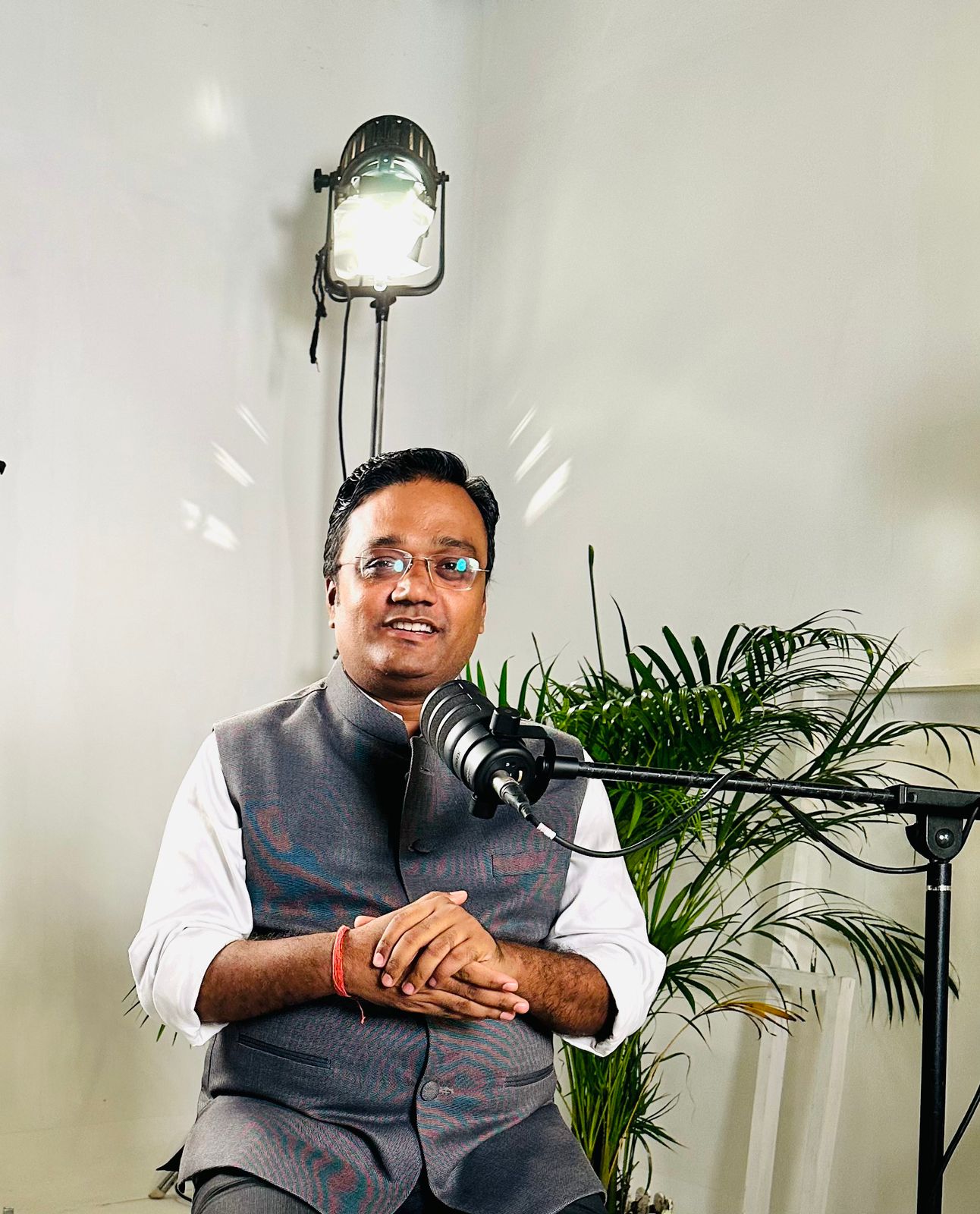 CA Manish Mishra
- Easing Finance
CA Manish Mishra is the Co-Founder & CEO at GenZCFO. He is the most sought professional for providing virtual CFO services to startups and established businesses across diverse sectors, such as retail, manufacturing, food, and financial services with over 20 years of experience including strategic financial planning, regulatory compliance, fundraising and M&A.