Search GrowthX Learning Content


Account Aggregator Framework: Impact on Financial Ecosystem
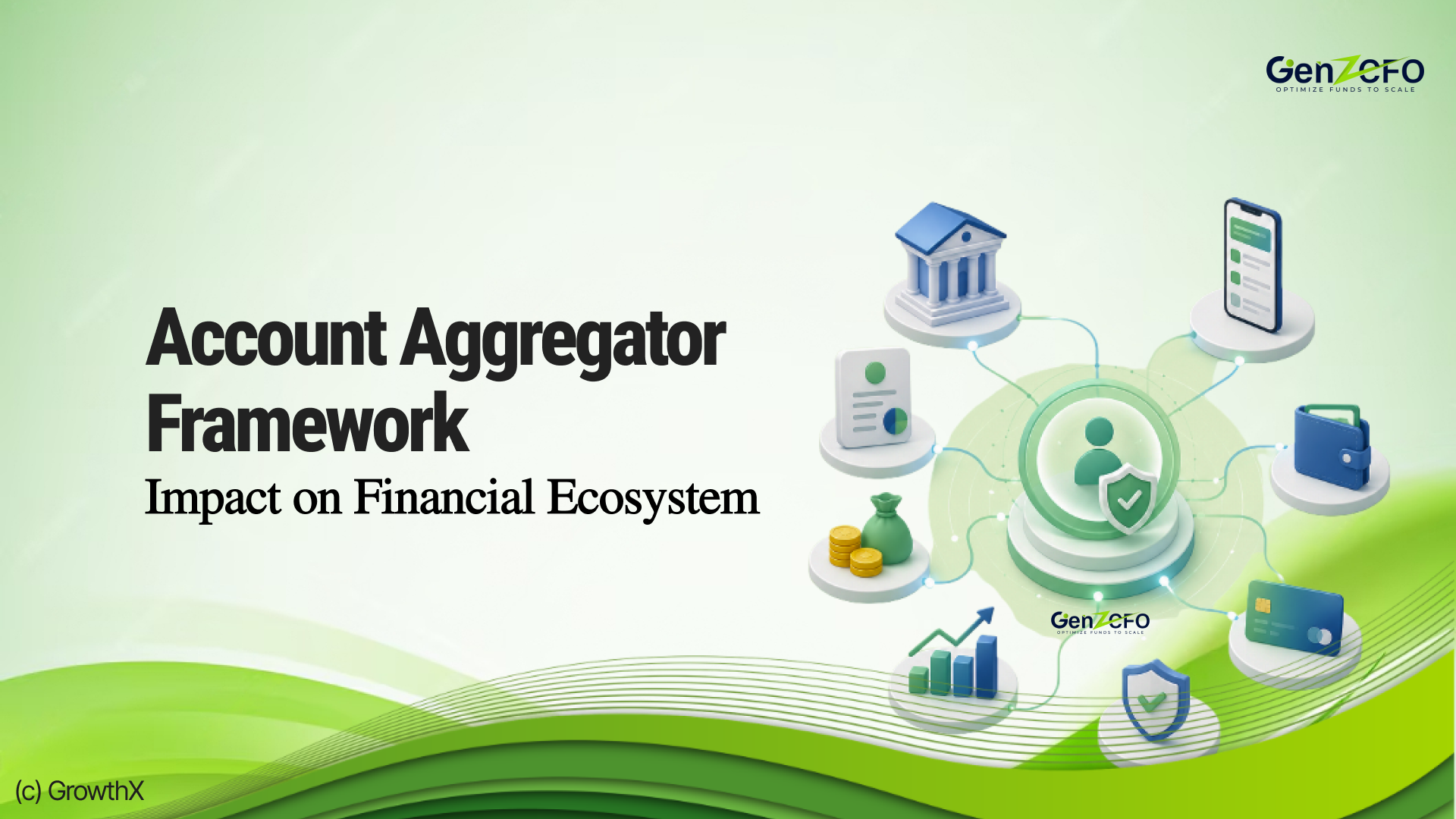
The Account Aggregator (AA) Framework is one of the most transformative reforms in India’s financial sector, fundamentally changing how financial data is accessed, shared, and utilized. Introduced under the regulatory supervision of the Reserve Bank of India, the framework is designed to create a secure, consent-driven ecosystem where individuals and businesses have complete control over their financial information. Before the introduction of this framework, financial data in India was highly fragmented. Individuals had to manually collect bank statements, tax returns, investment proofs, and other financial records whenever they needed to apply for loans or financial services.
This process was not only time-consuming but also inefficient and prone to fraud or data manipulation. The Account Aggregator system eliminates these inefficiencies by enabling real-time, digital, and consent-based sharing of financial data between regulated institutions. This shift marks a move from a “document-based economy” to a “data-driven economy,” where verified financial information flows seamlessly across institutions while maintaining strict privacy and security standards.
In this article, CA Manish Mishra talks about Account Aggregator Framework: Impact on Financial Ecosystem.
Deep Understanding of the Account Aggregator Framework
At its core, the Account Aggregator Framework is a technology-driven infrastructure that allows financial data to be shared securely through a standardized system. It operates through NBFC-Account Aggregators (NBFC-AAs), which are licensed intermediaries.
What makes the framework unique is its “data-blind” design. Account Aggregators do not store, process, or analyze financial data. Instead, they act as a secure conduit that transfers encrypted information from one regulated entity to another. This ensures that sensitive financial data is never exposed unnecessarily.
For example, when a borrower applies for a loan, instead of submitting multiple documents, they can simply give consent through an Account Aggregator. The lender can then access verified financial data directly from the borrower’s bank or financial institution. This not only speeds up the process but also ensures accuracy and authenticity.
Evolution and Growth of the AA Ecosystem
The Account Aggregator concept was introduced in 2016 as part of India’s broader initiative to build a robust digital financial ecosystem. Initially, the adoption was slow due to lack of awareness and limited participation. However, over time, the ecosystem has expanded significantly. Today, the AA network includes a wide range of participants such as banks, NBFCs, mutual funds, insurance companies, pension funds, and fintech platforms. This expansion reflects growing trust in the system and increasing recognition of its benefits.
The framework is now considered a crucial component of India’s Digital Public Infrastructure (DPI), alongside systems like Aadhaar, UPI, and DigiLocker. Together, these systems are enabling seamless digital transactions, identity verification, and data sharing across sectors.
Legal and Regulatory Framework
The Account Aggregator (AA) ecosystem is built on a strong legal and regulatory foundation to ensure that financial data sharing is secure, transparent, and accountable. Since the framework deals with highly sensitive financial information, strict compliance standards are necessary to protect user interests and maintain trust in the system. The regulatory structure ensures that all participants follow uniform rules, reducing risks related to data misuse and operational inefficiencies.
Role of the Reserve Bank of India
The Reserve Bank of India (RBI) plays a central and authoritative role in governing the AA framework. It is responsible for granting licenses to entities that wish to operate as Non-Banking Financial Company–Account Aggregators (NBFC-AAs). Only those entities that meet RBI’s strict eligibility criteria, including capital requirements, governance standards, and technological capabilities, are allowed to function as Account Aggregators.
The RBI also continuously monitors these entities to ensure that they comply with regulatory requirements. It has the power to impose penalties, revoke licenses, or issue corrective directions in case of non-compliance. This oversight ensures that the ecosystem remains reliable, secure, and aligned with financial stability objectives.
Regulatory Directions and Compliance
To maintain consistency and security in operations, the RBI has issued detailed regulatory directions that govern the functioning of Account Aggregators. These directions cover multiple aspects of operations and compliance.
Registration and Licensing Requirements
Entities must obtain a valid NBFC-AA license before commencing operations. They must meet financial, technical, and governance standards set by the RBI to ensure their capability to handle sensitive financial data.
Corporate Governance Standards
Account Aggregators are required to follow strict governance practices, including board oversight, internal controls, and risk management systems. This ensures ethical operations and accountability at all levels.
Consent Architecture and User Rights
The framework mandates a robust consent mechanism where users have complete control over their data. The system must clearly capture user consent and ensure that it is used only for the specified purpose.
Data Sharing Protocols
Standardized protocols are defined to ensure secure and seamless data exchange between Financial Information Providers (FIPs) and Financial Information Users (FIUs). This promotes interoperability across institutions.
Cybersecurity Measures
Strict cybersecurity requirements are imposed to protect data from unauthorized access, breaches, or cyber threats. Regular security audits and updates are mandatory to maintain system integrity.
Audit and Reporting Requirements
Account Aggregators must maintain detailed records and submit periodic reports to the RBI. Regular audits ensure compliance with regulatory standards and identify potential risks.
Grievance Redressal Mechanisms
A proper system must be in place to address customer complaints and disputes. This ensures that users have a clear channel for resolving issues related to data sharing or consent misuse.
These regulatory directions collectively ensure that the AA framework operates in a secure, transparent, and standardized manner across the financial ecosystem.
Data Privacy and Consent-Based Model
The AA framework is fundamentally based on the principle of explicit user consent, making it one of the most privacy-focused financial systems. Financial data cannot be accessed or shared without the clear approval of the customer.
Users have the ability to control every aspect of data sharing, including:
-
What data will be shared: Users can choose specific financial information such as bank statements or investment data.
-
Who will receive it: Data is shared only with authorized institutions selected by the user.
-
Purpose of sharing: The reason for data access must be clearly defined, such as loan processing or financial analysis.
-
Duration of access: Users can set a time limit for how long their data can be used.
Additionally, users can revoke consent at any time, ensuring ongoing control over their financial information. This model aligns with global data protection principles such as data minimization and purpose limitation, making the system highly secure and user-centric.
Key Participants in the AA Ecosystem
The effective functioning of the Account Aggregator framework depends on the interaction between three primary entities. Each participant has a distinct role that ensures secure and efficient data sharing.
Account Aggregators (AAs)
Account Aggregators are licensed intermediaries that act as facilitators of data exchange. Their primary role is to manage user consent and enable secure transfer of financial data between institutions. They ensure that data flows only between authorized entities and strictly according to the user’s consent instructions.
A key feature of Account Aggregators is that they do not store or access financial data. They only facilitate its transfer in encrypted form. They also maintain audit trails, which help track all data-sharing activities and ensure accountability within the system.
Financial Information Providers (FIPs)
Financial Information Providers are institutions that hold customer financial data. These include banks, insurance companies, mutual funds, pension funds, and other regulated entities.
FIPs are responsible for securely providing data when a valid request is received through the Account Aggregator system. They must ensure that data is accurate, up-to-date, and shared only after verifying user consent. Their role is critical in maintaining the integrity and reliability of the information being shared.
Financial Information Users (FIUs)
Financial Information Users are entities that utilize financial data to offer services such as loans, insurance, investment advice, or financial planning. These may include banks, NBFCs, fintech platforms, and wealth management firms.
FIUs rely on the data received through the AA framework to make informed decisions, assess risk, and provide customized financial solutions. Since the data is sourced directly from regulated institutions, it improves accuracy and reduces dependency on manual documentation.
Detailed Working Mechanism
The process of data sharing under the AA framework involves multiple steps, all designed to ensure security and transparency. First, the customer initiates a request through an Account Aggregator platform. Then, they provide detailed consent specifying the scope and purpose of data sharing.
The Account Aggregator verifies this consent and authenticates the request. Once verified, the data is securely transferred from the Financial Information Provider to the Financial Information User. Finally, the receiving institution uses this data to deliver the required financial service. This entire process is digital, eliminating delays and reducing dependency on manual documentation.
Importance and Benefits of the AA Framework
The Account Aggregator (AA) Framework has emerged as a powerful enabler in India’s financial ecosystem by shifting control of financial data from institutions to individuals. It is not just a technological innovation but a structural reform that enhances transparency, efficiency, and accessibility in financial services. Under the regulatory oversight of the Reserve Bank of India, the framework ensures that financial data is shared securely and only with user consent.
Customer Empowerment
One of the most significant benefits of the AA framework is that it gives complete control of financial data to the user. Earlier, financial institutions held and controlled customer data, but now individuals can decide what information to share, with whom, and for how long. This consent-based system ensures that users are not forced to share unnecessary data and can revoke access at any time. This level of control builds trust and promotes responsible data usage.
Financial Inclusion
The framework plays a critical role in improving financial inclusion, especially for individuals and small businesses that lack formal credit history. Many MSMEs and informal sector participants are unable to access loans due to insufficient documentation. With AA, lenders can analyze real-time financial data such as bank transactions and cash flows, enabling better credit assessment. This opens doors to formal credit and financial services for previously underserved segments.
Speed and Efficiency
The traditional financial process involved manual document submission, verification delays, and repetitive paperwork. The AA framework eliminates these inefficiencies by enabling real-time digital data sharing. Loan approvals, which previously took days or weeks, can now be processed within hours. This not only improves operational efficiency for institutions but also enhances the overall customer experience.
Fraud Reduction
Fraud and document manipulation have been long-standing challenges in the financial sector. With the AA framework, data is fetched directly from regulated institutions, ensuring authenticity and reliability. This reduces the chances of forged bank statements or fake documents being used for financial transactions. As a result, both lenders and borrowers benefit from a more secure system.
Better Financial Management
The framework allows users to view and manage their financial data from multiple sources in a consolidated manner. This helps individuals and businesses gain better insights into their financial health, track spending patterns, and make informed financial decisions. It also supports advanced financial planning and wealth management services.
Impact on Different Financial Sectors
The Account Aggregator Framework is transforming the financial ecosystem by improving efficiency, accessibility, and innovation across multiple sectors. In the banking sector, it enhances credit assessment and simplifies customer onboarding processes. Banks can access verified data quickly, reducing dependency on physical documents. In the NBFC sector, it enables faster loan approvals and better risk management by providing real-time financial insights.
Fintech companies are leveraging AA integration to build innovative products such as instant loans, budgeting tools, and personalized financial advisory services. MSMEs are benefiting from improved access to credit, as lenders can evaluate their financial performance more accurately. Insurance companies are also using AA data to offer customized policies based on individual financial profiles. Overall, the framework is making financial services more inclusive, efficient, and customer-centric, driving growth and innovation in the industry.
Cybersecurity and Data Protection
Security and privacy are at the core of the AA framework. The system is designed to ensure that financial data is protected at every stage of the process. The framework operates on a strict consent-based model, meaning data is shared only after explicit approval from the user. This ensures that individuals retain control over their information. Additionally, all data transfers are encrypted, preventing unauthorized access during transmission.
A key feature of the system is its “data-blind” architecture, where Account Aggregators do not store or access financial data. This significantly reduces the risk of data breaches and misuse. Combined with regulatory oversight and strong cybersecurity measures, the framework ensures a high level of protection for sensitive financial information.
Recent Developments and Updates
The AA ecosystem is continuously evolving with regulatory and technological advancements. Regulators have strengthened guidelines related to governance, cybersecurity, and audit requirements to ensure that the system remains secure and reliable.
There has been a significant increase in the number of participating institutions, including banks, NBFCs, insurance companies, and fintech firms. This expansion is improving network coverage and making the framework more effective. Integration with digital lending platforms is another key development, enabling faster and more efficient credit delivery. Additionally, efforts are being made to introduce self-regulatory mechanisms to ensure standardization, improve dispute resolution, and enhance overall ecosystem governance.
Challenges in Implementation
Despite its many advantages, the AA framework faces certain challenges that need to be addressed for wider adoption. One of the primary challenges is the lack of awareness among consumers. Many individuals are still unfamiliar with how the system works and its benefits. Increasing awareness and education will be crucial for adoption.
Cybersecurity risks continue to evolve, requiring constant monitoring and upgrading of security measures. Although the framework is highly secure, it must continuously adapt to emerging threats. Standardization across institutions is another challenge, as different entities may have varying systems and processes. Smaller institutions may also face technical and financial barriers in integrating with the AA ecosystem.
Future Outlook
The future of the Account Aggregator Framework is extremely promising. It is expected to play a central role in expanding financial inclusion, enabling digital lending, and supporting innovation in fintech.
As more institutions join the ecosystem and awareness increases, the framework will become a core component of India’s financial infrastructure. It will enable more personalized financial services, improve access to credit, and create a more transparent and efficient financial system.
Conclusion
The Account Aggregator Framework is a revolutionary initiative that is redefining how financial data is shared and utilized in India. By enabling secure, consent-based data sharing, it empowers users while improving efficiency across the financial ecosystem.
With strong regulatory backing from the Reserve Bank of India and continuous advancements in technology and governance, the framework is set to play a pivotal role in shaping the future of India’s financial sector. It represents a significant step toward a more inclusive, transparent, and digitally empowered financial economy.
Frequently Asked Questions (FAQs)
Q1. What is the Account Aggregator Framework?
Ans. The Account Aggregator Framework is a consent-based financial data-sharing system that allows individuals and businesses to securely share their financial information with regulated institutions. It is supervised by the Reserve Bank of India and aims to improve transparency, efficiency, and access to financial services.
Q2. Who regulates Account Aggregators in India?
Ans. Account Aggregators are regulated by the Reserve Bank of India. Only entities licensed as NBFC-Account Aggregators can operate in this ecosystem. The RBI ensures that these entities follow strict guidelines related to data security, consent management, and operational standards.
Q3. Is my financial data safe in the AA framework?
Ans. Yes, the AA framework is designed with strong security features. Data is shared only after user consent and is transferred in encrypted form. Account Aggregators do not store or access data, making the system highly secure and minimizing the risk of misuse or data breaches.
Q4. What role does an Account Aggregator play?
Ans. An Account Aggregator acts as an intermediary that facilitates secure transfer of financial data between institutions. It manages user consent and ensures that data is shared only with authorized entities. It does not store or analyze financial information.
Q5. Who are Financial Information Providers (FIPs)?
Ans. FIPs are institutions that hold customer financial data, such as banks, insurance companies, and mutual funds. They share data only when valid consent is provided through the Account Aggregator network, ensuring compliance with privacy regulations.
Q6. Who are Financial Information Users (FIUs)?
Ans. FIUs are institutions that use financial data to provide services like loans, investment advice, or insurance products. They rely on accurate and verified data to improve decision-making and offer better financial solutions to customers.
Q7. How does the consent mechanism work?
Ans. Users provide explicit consent through an Account Aggregator platform. They can specify what data will be shared, for what purpose, and for how long. This consent is revocable, giving users full control over their financial information at all times.
Q8. How does the AA framework help in loan processing?
Ans. The framework allows lenders to access verified financial data instantly, eliminating the need for physical documents. This speeds up loan approval processes, reduces paperwork, and improves accuracy in credit assessment, benefiting both lenders and borrowers.
Q9. What is the impact of AA on financial inclusion?
Ans. The AA framework helps individuals and small businesses with limited credit history access formal financial services. By analyzing real financial data, lenders can assess creditworthiness more effectively, expanding access to loans and financial products.
Q10. Can users revoke consent after sharing data?
Ans. Yes, users have complete control over their data and can revoke consent at any time. Once consent is withdrawn, further data sharing is stopped, ensuring that users maintain control over their financial information.
- 12 May, 2026
 CA Manish Mishra
- Easing Finance
CA Manish Mishra is the Co-Founder & CEO at GenZCFO. He is the most sought professional for providing virtual CFO services to startups and established businesses across diverse sectors, such as retail, manufacturing, food, and financial services with over 20 years of experience including strategic financial planning, regulatory compliance, fundraising and M&A.