Search GrowthX Learning Content


FFMC vs Authorised Dealer: What Is the Difference?

Buying euros for a business trip and paying a European supplier both involve foreign exchange. Yet an RBI-authorised money changer can sell a traveller euros for the trip, while an appropriately authorised dealer must handle the supplier payment. The difference lies in the purpose of the transaction and the scope of the provider’s RBI authorisation.
A Full Fledged Money Changer (FFMC) mainly buys foreign currency and sells it for overseas travel. An Authorised Dealer (AD) can handle a broader or more specialised range of foreign exchange transactions, depending on its category. AD Category-I banks have the broadest scope. Under the 2026 rules, AD Category-II providers can handle permissible non-trade current account transactions, excluding gifts and donations under their general permission, as well as eligible foreign trade transactions up to Rs 25 lakh per transaction.
In this article, CA Manish Mishra talks about FFMC vs Authorised Dealer: What Is the Difference?
How FEMA classifies FFMCs and Authorised Dealers
Under Section 2(c) of the Foreign Exchange Management Act, 1999 (FEMA), money changers and Authorised Dealers both fall under the wider definition of an Authorised Person. Section 10(1) empowers the Reserve Bank of India to grant authorisation to deal in foreign exchange or foreign securities. The category and the conditions attached to the authorisation determine which activities an entity can undertake.
The distinction matters when a forex service is offered through a website, app or travel agency. The customer-facing company may act as an agent or facilitate the transaction through an authorised bank. Before sending money, check which entity will process the transaction and whose name appears on the receipt or remittance confirmation.
FFMC vs Authorised Dealer at a glance
|
Basis |
FFMC |
AD Category-I |
AD Category-II |
AD Category-III |
|
Main role |
Buys foreign currency and sells it for overseas travel |
Handles permissible current and capital account transactions |
Handles permissible non-trade transactions and eligible trade transactions within the prescribed limit |
Handles the activities specified in its RBI authorisation |
|
Typical use |
Buying euros for a trip or exchanging unused foreign notes for rupees |
Paying an overseas supplier, receiving export proceeds or routing an overseas investment |
Paying overseas tuition fees or processing an eligible trade payment |
Offering a specialised service involving foreign exchange |
|
Foreign trade payments |
Outside the scope of FFMC authorisation |
Permitted under the applicable FEMA rules |
Up to Rs 25 lakh per transaction, subject to applicable rules and authorisation conditions |
Depends on the specific authorisation |
|
Capital account transactions |
Outside the scope of FFMC authorisation |
Permitted where the applicable rules allow the transaction |
Outside the ordinary scope of AD Category-II |
Depends on the specific authorisation |
|
Fresh authorisation |
Limited to applications already under process when the 2026 regulations came into force, subject to transitional conditions |
Available to eligible RBI-licensed banks |
Available to eligible banks, NBFCs, qualifying FFMCs and Forex Correspondents |
Available to eligible entities for specified activities |
What can a Full Fledged Money Changer do?
An FFMC can purchase foreign currency notes and travellers’ cheques and sell them for foreign travel. For example, a person returning to India can exchange unused euros for rupees. An employee going abroad for a conference can also buy foreign currency for eligible travel expenses. Depending on the transaction, the FFMC may ask for identification, travel documents and a declaration about the purpose of the purchase.
An FFMC may also act as an agent under the Money Transfer Service Scheme (MTSS), subject to the scheme’s conditions. This allows it to participate in eligible inward personal remittances into India. Paying an overseas university, settling an import invoice or funding a foreign subsidiary requires a provider authorised to handle that particular transaction.
What can an Authorised Dealer do?
AD Category-I
An AD Category-I bank can handle current and capital account transactions permitted under FEMA. Businesses commonly use these banks to pay overseas suppliers, receive export proceeds, route eligible foreign investment into India and make permissible overseas investments. The bank checks the purpose, supporting documents and any reporting requirements before processing the transaction.
For example, if an Indian company plans to subscribe to shares in an overseas subsidiary, the transaction may fall under the overseas investment rules. The designated AD Category-I bank can review the proposed remittance and the related documentation. The company still needs to meet the eligibility and reporting requirements that apply to the investment.
AD Category-II
An AD Category-II provider can handle permissible non-trade current account transactions, with gifts and donations excluded under the general permission. Common examples include remittances for overseas education, medical treatment abroad, business travel and conference fees. A student who needs to pay tuition directly to a foreign university can approach an AD Category-II provider that offers education remittance services.
Under the Foreign Exchange Management (Authorised Persons) Regulations, 2026, AD Category-II providers can also handle eligible foreign trade transactions up to Rs 25 lakh per transaction. This ceiling applies to the category’s trade permission. The provider must still confirm that it can handle the specific transaction under its authorisation and that the applicable trade and documentation requirements are met.
AD Category-III
An AD Category-III entity can undertake the foreign exchange activities specified in its RBI authorisation. The category can apply to an entity that needs to deal in foreign exchange as part of its existing business or that proposes an innovative product or service involving foreign exchange. The authorisation itself determines which transactions the entity can process.
Practical example of choosing the right forex provider
A Pune-based manufacturer is preparing for a trade exhibition in Germany. Its finance team needs euros for employees travelling to the event, has an Rs 18 lakh invoice from a German machinery supplier and is considering buying shares in a German distribution company. Each transaction requires a different check, even though all three involve the same foreign currency.
|
What the company needs to do |
Which provider to approach |
What to verify |
|
Buy euros for employees travelling to Germany |
FFMC or another Authorised Person offering travel forex |
Travel purpose, documents and applicable limits |
|
Pay an Rs 18 lakh machinery invoice |
AD Category-I bank or eligible AD Category-II provider |
Whether the provider handles the transaction and what import records it requires |
|
Pay an Rs 35 lakh machinery invoice |
AD Category-I bank |
Import documentation and payment requirements. The amount exceeds the general AD Category-II trade ceiling. |
|
Invest in a German distribution company |
Designated AD Category-I bank |
Overseas investment eligibility, documentation and reporting obligations |
Can businesses still apply for a fresh FFMC licence?
The Foreign Exchange Management (Authorised Persons) Regulations, 2026, notified as FEMA 401/2026-RB, came into force on 6 May 2026. Under Regulation 3(6), the RBI considers fresh FFMC applications only if they were already under process on that date. Where the RBI had requested additional documents or information for such an application, the regulations provided 30 days from commencement to submit them.
An existing FFMC can continue under its authorisation until expiry and may apply for renewal if it meets the prescribed conditions. Under Regulation 5, the minimum net worth for renewal is Rs 25 lakh for a single-branch FFMC and Rs 50 lakh for a multiple-branch FFMC. An FFMC must apply for renewal at least two months before expiry. If it applies on time, the existing authorisation continues until the RBI grants or rejects the application.
The regulations also prescribe minimum annual forex turnover of Rs 10 crore for FFMCs. The requirement must be achieved within two years from the commencement of the regulations or the start of forex business, whichever is later, and maintained thereafter.
Can an FFMC become an AD Category-II provider?
An FFMC or Forex Correspondent can apply for AD Category-II authorisation if it has operated for at least two years and achieved an average annual forex turnover of Rs 50 crore during the previous two financial years. For this calculation, the regulations exclude the value of inward remittances processed. The applicant must also meet the applicable fit-and-proper requirements and have a minimum positive net worth of Rs 10 crore at the commencement of authorised business, supported by a statutory auditor’s certificate.
Eligible entities can apply through the RBI’s PRAVAAH portal. An FFMC can start offering AD Category-II services once the RBI grants the relevant authorisation and the entity fulfils the applicable conditions.
How is a Forex Correspondent different from an FFMC?
Under the Forex Correspondent Scheme, an AD Category-I or AD Category-II provider can appoint a Forex Correspondent (FxC) to undertake permitted money-changing activities as its agent. These activities can include purchasing foreign currency, selling foreign currency for overseas travel and acting as an MTSS sub-agent, subject to the applicable conditions. The appointing AD records the transactions in its books. An FFMC operates under its own RBI authorisation.
The 2026 regulations also ended fresh appointments under the earlier money-changing franchise scheme and provided a two-year transition from 6 May 2026 for existing arrangements. A business planning to open a forex counter can explore appointment as a Forex Correspondent and confirm which activities the appointing AD would permit it to carry out.
What should customers and businesses check before a forex transaction?
Start by identifying the purpose and amount of the transaction. For travel currency, check the provider’s authorisation, exchange rate, fees and documentation requirements. For an overseas remittance, confirm which entity will process the transfer, which documents it requires and whether it can meet the payment deadline. A business paying an overseas supplier should also confirm that the provider can handle the amount and the relevant import documentation.
Under Section 10(5) of FEMA, an Authorised Person can seek declarations and information to verify that the proposed transaction complies with FEMA. A traveller may need identification and travel details, while an importer may need an invoice and supporting import records. For a customer choosing between an FFMC and an Authorised Dealer, the simplest starting point is to ask whether they need foreign currency for travel, a transfer to an overseas recipient, or a trade or investment transaction. That answer determines which provider can help.
Conclusion
The difference between an FFMC and an Authorised Dealer comes down to the transaction each can handle. An FFMC is suitable for buying foreign currency for overseas travel or exchanging unused foreign notes for rupees. An AD Category-II provider can handle eligible remittances, such as overseas tuition fees, and certain foreign trade transactions up to Rs 25 lakh per transaction. An AD Category-I bank has the broadest scope and can handle permissible current and capital account transactions, including overseas investments.
For businesses entering the forex sector, the 2026 rules also change the available routes. Existing FFMCs can apply for renewal if they meet the prescribed conditions, while fresh FFMC applications are limited to those already under process on 6 May 2026. A business planning to open a forex counter can explore appointment as a Forex Correspondent. An existing FFMC looking to expand into remittances or trade payments can assess whether it qualifies for AD Category-II authorisation.
Frequently Asked Questions (FAQ’s)
Q1. What is the main difference between an FFMC and an Authorised Dealer?
Ans. An FFMC mainly buys foreign currency and sells it for overseas travel. An Authorised Dealer can handle additional foreign exchange transactions, such as eligible overseas remittances, trade payments or investments, depending on its RBI category.
Q2. Is an FFMC an Authorised Person under FEMA?
Ans. Yes. An FFMC is an Authorised Person under FEMA because the RBI authorises it as a money changer under Section 10(1). Authorised Dealers also fall within the definition of an Authorised Person, with a separate scope of permitted activities.
Q3. Can an FFMC pay tuition fees directly to an overseas university?
Ans. An FFMC authorisation does not cover outward tuition remittances. A student can approach an AD Category-I bank or an AD Category-II provider that offers education remittance services.
Q4. Can an AD Category-II provider process import payments?
Ans. Yes. The 2026 regulations permit AD Category-II providers to handle eligible foreign trade transactions up to Rs 25 lakh per transaction. The provider’s authorisation and the applicable import documentation requirements still apply.
Q5. Can an AD Category-II provider send gifts or donations abroad?
Ans. Gifts and donations are excluded from the general permission for AD Category-II non-trade current account transactions. A customer can approach an AD Category-I bank to check whether the proposed remittance is permitted under the applicable rules.
Q6. Which Authorised Dealer handles overseas investments by Indian companies?
Ans. An Indian company generally routes an eligible overseas investment through its designated AD Category-I bank. The bank reviews the transaction documents and helps the company meet the applicable reporting requirements.
Q7. Can a company apply for a fresh FFMC licence in 2026?
Ans. The RBI considers only those fresh FFMC applications that were already under process when the 2026 regulations came into force on 6 May 2026. Those applications are subject to the transitional conditions.
Q8. What is the minimum net worth for renewing an FFMC authorisation?
Ans. The minimum net worth is Rs 25 lakh for a single-branch FFMC and Rs 50 lakh for a multiple-branch FFMC. An existing FFMC must apply for renewal at least two months before its authorisation expires.
Q9. Can an existing FFMC become an AD Category-II provider?
Ans. Yes. An FFMC can apply if it has operated for at least two years and recorded an average annual forex turnover of Rs 50 crore over the preceding two financial years. It must also meet other prescribed conditions, including Rs 10 crore in minimum positive net worth at the start of its authorised business.
Q10. How is a Forex Correspondent different from an FFMC?
Ans. A Forex Correspondent performs permitted money-changing activities as an agent of an appointing AD Category-I or AD Category-II provider. An FFMC performs its permitted activities under its own RBI authorisation.
- 12 Nov, 2026
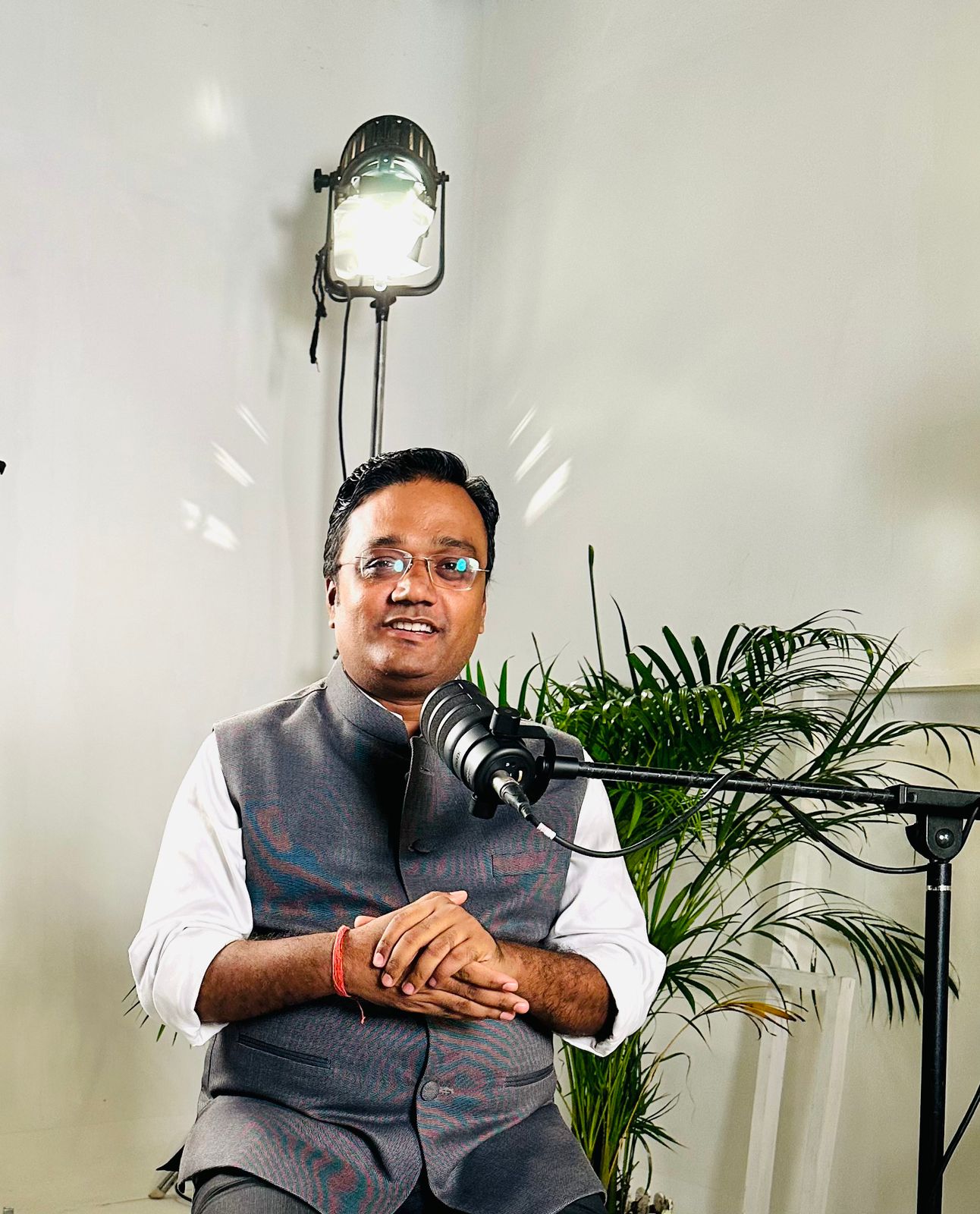 CA Manish Mishra
- Corporate Actions
CA Manish Mishra is the Co-Founder & CEO at GenZCFO. He is the most sought professional for providing virtual CFO services to startups and established businesses across diverse sectors, such as retail, manufacturing, food, and financial services with over 20 years of experience including strategic financial planning, regulatory compliance, fundraising and M&A.