Search GrowthX Learning Content


How 0.4% UPI MDR Fees Squeeze Indian NBFC Lending Margins
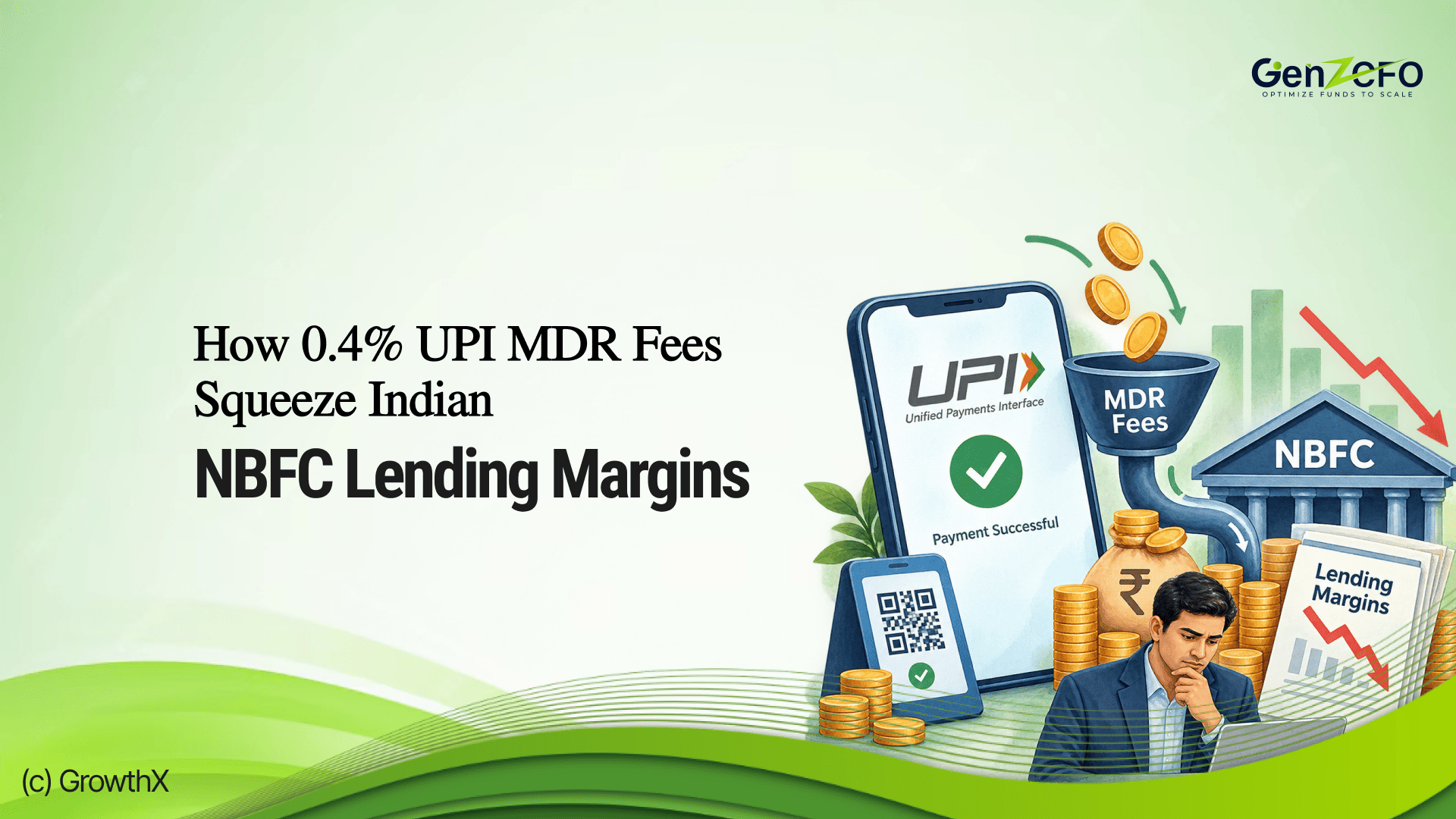
India’s financial ecosystem has experienced a significant transformation with the rapid adoption of digital payments and technology-driven lending solutions. Unified Payments Interface (UPI) has become one of the most widely used digital payment systems, enabling businesses, customers, and financial institutions to conduct faster and more convenient transactions. Non-Banking Financial Companies (NBFCs) have actively integrated digital payment systems into their operations, especially for loan disbursement, EMI collections, customer repayments, and digital lending platforms. These technology-driven processes have helped NBFCs reduce operational challenges and improve customer accessibility.
However, the introduction of a 0.4% UPI Merchant Discount Rate (MDR) on certain eligible merchant transactions has created discussions among lenders and digital finance companies. Although the percentage appears small, NBFCs operating with high transaction volumes and limited lending margins may experience a noticeable impact on their operational costs. For lending institutions, profitability depends on maintaining a balance between interest income and expenses such as borrowing costs, technology infrastructure, employee expenses, compliance requirements, and collection costs. Therefore, even a small increase in payment processing expenses can influence overall margins.
In this article, CA Manish Mishra talks about How 0.4% UPI MDR Fees Squeeze Indian NBFC Lending Margins.
Understanding UPI MDR and Its Role in Digital Payments
What is Merchant Discount Rate (MDR)?
Merchant Discount Rate (MDR) refers to the fee charged for processing digital payment transactions. It represents the cost associated with maintaining and operating the payment ecosystem, including transaction processing, settlement services, cybersecurity infrastructure, and technology support. In the digital payment ecosystem, multiple stakeholders such as banks, payment service providers, and technology platforms contribute to completing a transaction. MDR helps support the infrastructure required for secure and efficient payment processing.
For NBFCs, payment systems are an important part of their operational model because loan repayments and collections are increasingly managed through digital channels. Any change in payment processing costs directly affects the expense structure of lenders that depend heavily on digital transactions.
Why Are NBFCs Concerned About UPI MDR Charges?
Thin Lending Margins Make Small Costs Significant
NBFCs generally operate on a lending spread model, where the difference between borrowing costs and lending income determines profitability. Unlike businesses that can easily increase prices, lenders operate within competitive markets where interest rates and customer affordability are important considerations.
An additional transaction-level expense may appear insignificant when viewed individually, but its impact becomes larger when applied across thousands or millions of repayment transactions. For example, an NBFC managing a large customer base may process a significant number of EMI payments every month. If digital collection transactions attract additional charges, the cumulative impact can increase the overall cost of managing loans.
Impact of UPI MDR on NBFC Lending Operations
Increase in Digital Collection Costs
Digital loan repayment has become an essential part of NBFC operations. Many lenders use UPI-based payment links, QR codes, payment gateways, and mobile applications to allow customers to make convenient EMI payments. The advantage of digital collections is that they reduce dependency on physical collection methods and improve payment tracking.
However, when payment processing charges increase, lenders need to evaluate whether their existing collection systems remain cost-efficient. For NBFCs dealing with a large number of small-value loans, repayment collection happens frequently. Therefore, even a minor increase in transaction costs can significantly affect the total operational expenditure of the lending business.
Pressure on Lending Margins
The profitability of an NBFC depends on efficient cost management. Lending income must cover several expenses, including interest paid on borrowed funds, employee costs, technology investments, loan servicing expenses, and regulatory compliance costs.
When additional expenses arise from payment processing, NBFCs may experience pressure on their net margins. This becomes particularly relevant for digital lenders and microfinance-focused NBFCs where operational efficiency plays a major role in maintaining profitability. However, the actual impact may differ among NBFCs depending on factors such as loan size, repayment frequency, customer segment, and payment methods used.
How Digital Lending NBFCs May Manage Increased Payment Costs
Optimising Payment Collection Channels
To manage additional payment-related expenses, NBFCs may review their existing collection infrastructure and identify opportunities to reduce unnecessary costs. Lenders may explore different payment solutions, improve agreements with payment service providers, and encourage efficient repayment channels.
The objective is to maintain customer convenience while ensuring that collection expenses remain sustainable. A well-planned payment strategy can help NBFCs control operational costs without affecting the overall customer experience.
Improving Technology Efficiency
Technology is at the centre of modern lending operations. NBFCs increasingly use automation, artificial intelligence, and data analytics to improve customer management and reduce operational expenses.
Automated repayment reminders, digital customer communication, and technology-based collection systems can help lenders reduce manual efforts and improve efficiency. By strengthening their technology infrastructure, NBFCs can offset certain additional costs and create a more efficient lending ecosystem.
Effect on Small Loan and Micro-Lending Models
High Volume, Low Ticket Loans Face Greater Sensitivity
Micro-lending and small-ticket loan businesses are more sensitive to transaction costs because they handle a large number of repayment transactions involving smaller amounts. For example, a lender providing small consumer loans or micro-business loans may receive thousands of EMI payments every month. In such cases, payment processing charges can become an important cost factor.
These lenders need to carefully analyse their payment structures because their business models depend heavily on maintaining low operational expenses while serving customers at affordable rates.
Impact on Customers and Borrowers
Will Borrowers Directly Pay Higher Charges?
The impact of UPI MDR on borrowers depends on how NBFCs manage their payment strategies and operational costs. Financial institutions generally consider customer affordability, transparency, and regulatory requirements while making pricing decisions. Instead of directly transferring every additional cost to customers, lenders may focus on improving internal efficiency and optimising payment processes. Customer protection remains an important consideration in the lending ecosystem, especially as digital finance continues to expand.
UPI Ecosystem and Financial Sustainability
Balancing Free Digital Payments with Infrastructure Costs
UPI has played a major role in promoting digital payments across India by providing a convenient and accessible payment platform. The widespread adoption of UPI has benefited consumers, businesses, and financial institutions. However, maintaining a large-scale payment infrastructure requires continuous investment in technology, cybersecurity, and operational support.
The discussion around MDR highlights the need to balance two important objectives: keeping digital payments accessible while ensuring that the payment ecosystem remains financially sustainable. For NBFCs and other financial businesses, payment infrastructure costs are becoming an important factor in evaluating long-term operational strategies.
Strategic Changes NBFCs May Consider
Reviewing Payment Partnerships
NBFCs may reconsider their relationships with payment service providers to identify opportunities for cost optimisation. Negotiating better payment solutions and improving settlement processes can help lenders manage transaction expenses. Strategic partnerships can allow NBFCs to maintain efficient payment systems while controlling operational costs.
Increasing Digital Automation
Automation can help NBFCs improve efficiency across multiple areas, including loan servicing, repayment reminders, customer communication, and collections. Technology-driven processes reduce manual intervention and allow lenders to manage larger customer bases with improved efficiency. As digital lending continues to grow, automation will remain an important tool for controlling costs and improving customer experience.
Building Cost-Efficient Lending Models
NBFCs need to continuously evaluate their business models to maintain profitability in a competitive environment. Efficient risk management, technology adoption, improved customer onboarding, and streamlined collection processes can help lenders manage increasing operational challenges. A cost-efficient lending model allows NBFCs to provide accessible financial services while maintaining business sustainability.
Regulatory Considerations for NBFCs
Maintaining Compliance with RBI Guidelines
NBFCs operate under the regulatory framework of the Reserve Bank of India (RBI). Any changes in payment systems, lending processes, or customer charges must be evaluated carefully within existing regulatory requirements. Digital lending regulations require NBFCs to maintain transparency, protect customer interests, and ensure responsible lending practices. Therefore, while managing payment-related costs, NBFCs must continue maintaining compliance with RBI guidelines and consumer protection standards.
Future Outlook: Digital Lending and Payment Cost Evolution
The relationship between digital payments and lending will continue evolving as technology becomes more integrated into financial services. UPI has already changed the way customers interact with financial institutions, and future developments will further influence lending operations.
NBFCs will need to focus on innovation, cost management, and technology adoption to remain competitive. Efficient payment systems, automated operations, and responsible lending practices will play an important role in shaping the future of digital lending in India.
Conclusion
The introduction of a 0.4% UPI MDR framework highlights the importance of payment infrastructure costs in India’s growing digital lending ecosystem. For NBFCs, where profitability depends on operational efficiency and controlled expenses, even small transaction-level charges can influence overall margins.
While the impact may vary depending on the business model, customer base, and transaction volume, NBFCs will need to continuously review their payment strategies and technology systems. By adopting automation, improving operational efficiency, and maintaining regulatory compliance, NBFCs can manage changing payment dynamics while continuing to provide accessible financial services to customers.
Frequently Asked Questions (FAQs)
Q1. What is UPI MDR and why is it important for NBFCs?
Ans. UPI MDR (Merchant Discount Rate) is a fee associated with processing certain digital payment transactions through the UPI ecosystem. For NBFCs, which increasingly rely on digital channels for EMI collections, loan repayments, and customer transactions, any increase in payment processing costs can influence overall operational expenses and lending margins.
Q2. How does a 0.4% UPI MDR fee affect NBFC lending margins?
Ans. A 0.4% transaction fee may appear small at an individual transaction level, but for NBFCs handling thousands or millions of repayment transactions, the cumulative cost can become significant. Since NBFCs operate with carefully calculated lending spreads, additional payment-related expenses may put pressure on profitability.
Q3. Why are small-ticket loan NBFCs more affected by payment charges?
Ans. Small-ticket loan providers and micro-lending NBFCs generally process a large number of low-value repayment transactions. Because their business model depends on high transaction volumes and controlled operating costs, even minor increases in digital collection expenses can have a noticeable impact on their overall cost structure.
Q4. Will NBFCs pass UPI MDR costs directly to borrowers?
Ans. Not necessarily. The impact on borrowers depends on how individual NBFCs manage their operational expenses and payment strategies. Lenders may explore cost optimisation measures, improve technology systems, or restructure payment arrangements while considering customer affordability and regulatory requirements.
Q5. Why do NBFCs depend heavily on UPI for loan collections?
Ans. UPI provides a fast, convenient, and accessible payment method for customers. NBFCs use UPI-based solutions such as payment links, QR codes, and digital repayment platforms to simplify EMI collections, reduce manual efforts, improve tracking, and enhance customer experience.
Q6. Can UPI MDR charges increase the cost of digital lending operations?
Ans. Yes, payment processing costs form part of the operational expenses of digital lenders. When NBFCs use digital payment channels extensively, additional transaction charges may increase collection costs and require businesses to review their payment strategies.
Q7. How can NBFCs manage the impact of rising payment costs?
Ans. NBFCs can manage additional payment costs by improving operational efficiency, adopting automation, reviewing payment partnerships, optimising collection channels, and using technology-driven solutions to reduce unnecessary expenses.
Q8. Does UPI MDR affect all NBFCs equally?
Ans. No, the impact varies depending on factors such as the NBFC’s business model, customer segment, loan portfolio size, repayment frequency, and dependence on UPI-based collections. NBFCs with higher digital transaction volumes may experience a greater impact compared to those using multiple collection channels.
Q9. What role does technology play in reducing NBFC operational costs?
Ans. Technology helps NBFCs automate repayment reminders, customer communication, loan servicing, and collection processes. Advanced digital systems can improve efficiency, reduce manual intervention, and help lenders manage additional operational expenses.
Q10. How does UPI MDR influence the future of digital lending in India?
Ans. UPI MDR highlights the importance of building a sustainable digital payment ecosystem. As digital lending continues to expand, NBFCs will need to focus on efficient payment management, technology adoption, and cost optimisation to maintain sustainable growth.
- 19 Sep, 2026
 CA Manish Mishra
- Corporate Actions
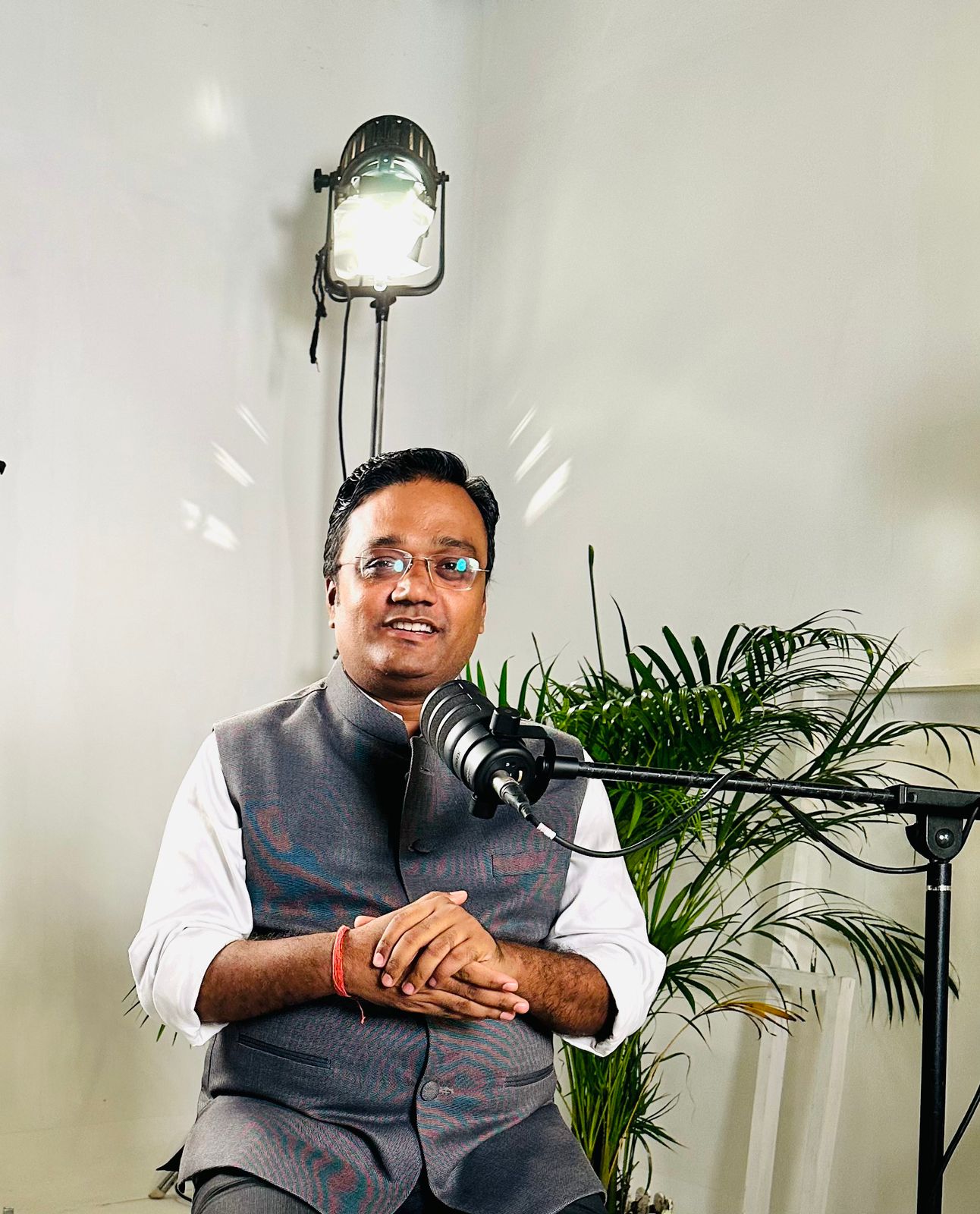
CA Manish Mishra is the Co-Founder & CEO at GenZCFO. He is the most sought professional for providing virtual CFO services to startups and established businesses across diverse sectors, such as retail, manufacturing, food, and financial services with over 20 years of experience including strategic financial planning, regulatory compliance, fundraising and M&A.