Search GrowthX Learning Content


How Scale-Based Regulation Affects NBFC Compliance
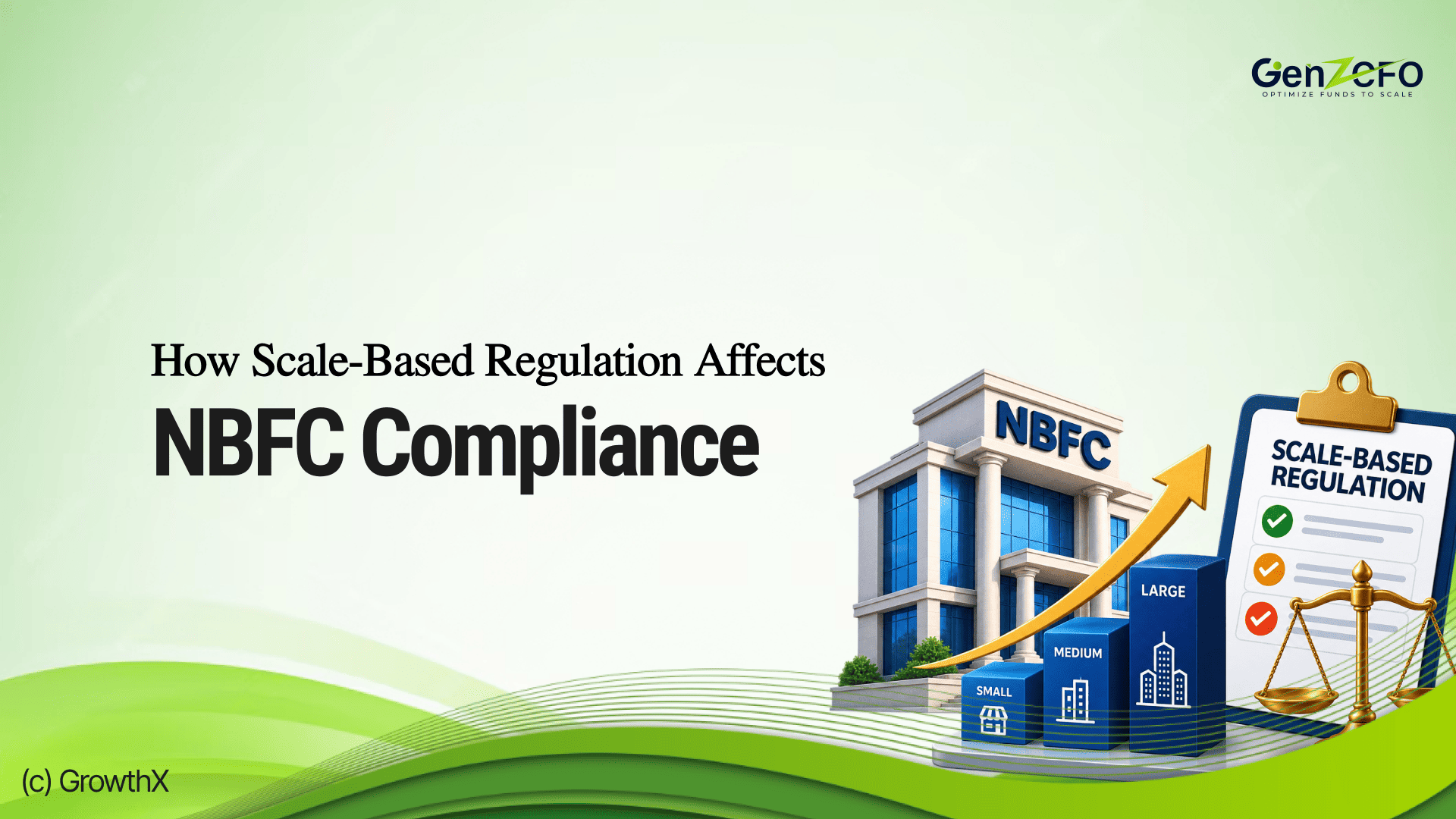
Non-Banking Financial Companies (NBFCs) have become an essential part of India’s financial system by providing credit facilities to individuals, businesses, and various sectors of the economy. They support financial inclusion by reaching customers who may not always have access to traditional banking services. With the rapid expansion of NBFCs, especially in digital lending, consumer finance, infrastructure finance, and microfinance sectors, the Reserve Bank of India (RBI) recognised the need for a more structured regulatory approach. Earlier, NBFC regulations were largely based on factors such as asset size, deposit acceptance, and business activities.
However, a uniform regulatory approach created challenges because smaller NBFCs and large systemically important NBFCs carried different levels of risk. To address this concern, RBI introduced the Scale-Based Regulation (SBR) Framework for NBFCs, which categorises NBFCs into different regulatory layers based on their size, complexity, and impact on the financial system. Under this, compliance requirements increase according to the scale and risk profile of an NBFC. Larger NBFCs are required to follow stricter governance, risk management, disclosure, and capital requirements, while smaller NBFCs continue to operate under proportionate regulations. The objective is to ensure financial stability while allowing smaller institutions to function efficiently.
In this article, CA Manish Mishra talks about How Scale-Based Regulation Affects NBFC Compliance.
Scale-Based Regulation for NBFCs
The Scale-Based Regulation framework introduced by RBI follows a risk-based regulatory structure where NBFCs are classified into four different layers: Base Layer, Middle Layer, Upper Layer, and Top Layer. The classification determines the level of regulatory supervision and compliance obligations applicable to each NBFC.
The framework recognises that not all NBFCs create the same level of risk for the financial system. A small NBFC operating in a limited geographical area does not require the same level of supervision as a large NBFC with thousands of crores in assets and significant market exposure. Therefore, RBI has adopted a proportional approach where regulatory requirements increase as the size and systemic importance of an NBFC increases.
Base Layer NBFCs (NBFC-BL)
Base Layer NBFCs generally include smaller NBFCs that have limited operations and lower systemic importance. These entities are subject to basic regulatory requirements relating to capital adequacy, governance, reporting, and fair lending practices.
Although Base Layer NBFCs face comparatively fewer compliance obligations, they must still maintain proper accounting systems, follow RBI directions, submit required returns, and ensure compliance with customer protection guidelines. The objective is to ensure that even smaller NBFCs maintain minimum standards of operational discipline and financial transparency. For smaller NBFCs, the SBR framework provides regulatory relief because they are not required to implement the same advanced systems required by larger entities. However, they must gradually strengthen their compliance framework as their business expands.
Middle Layer NBFCs (NBFC-ML)
Middle Layer NBFCs represent entities with higher asset size, greater operational complexity, or increased financial significance. These NBFCs face additional regulatory requirements compared to Base Layer entities. The compliance expectations for Middle Layer NBFCs include stronger corporate governance practices, enhanced risk management systems, internal audits, and stricter reporting requirements. These entities are expected to maintain proper oversight mechanisms because their activities have a greater impact on borrowers, investors, and the financial market.
Middle Layer NBFCs must establish structured policies for credit risk management, liquidity management, information security, and compliance monitoring. They are also required to maintain better documentation and internal controls to ensure that business operations remain aligned with RBI regulations.
Upper Layer NBFCs (NBFC-UL)
Upper Layer NBFCs are entities that have a significant presence in the financial system and are identified by RBI based on their size, complexity, and systemic importance. These NBFCs are subject to regulations similar to those applicable to banks in certain areas. They are required to maintain advanced governance, stronger risk management systems, and enhanced disclosures.
Upper Layer NBFCs must focus extensively on enterprise-wide risk management, board supervision, internal audit functions, cybersecurity controls, and financial reporting standards. Since their failure could affect financial stability, RBI closely monitors these institutions. The purpose of stricter regulation is to ensure that large NBFCs have sufficient financial strength and operational capability to manage risks effectively.
Top Layer NBFCs (NBFC-TL)
The Top Layer represents the highest level of regulatory supervision under the Scale-Based Regulation framework. These entities are expected to carry the highest level of systemic risk and may include NBFCs requiring additional regulatory attention.
Top Layer NBFCs are subject to the most stringent compliance requirements, including enhanced monitoring, additional risk controls, and stricter governance expectations. RBI may place entities in this category when it believes that additional supervision is necessary to protect financial stability. The objective of this layer is preventive supervision, ensuring that potential risks are identified and controlled before they create wider financial consequences.
Impact of Scale-Based Regulation on NBFC Compliance
Increase in Corporate Governance Requirements
One of the biggest impacts of Scale-Based Regulation is the increased focus on corporate governance. NBFCs are no longer viewed only as lending institutions but as important financial entities requiring strong management systems and accountability. Under the framework, NBFCs must ensure that their Board of Directors actively supervises business activities, risk exposure, and regulatory compliance.
The Board is expected to review important policies, monitor financial performance, and ensure that management decisions are aligned with regulatory requirements. For larger NBFCs, governance requirements become more detailed. They need properly structured committees, independent directors, internal audit systems, and mechanisms to identify and manage potential risks.
Higher Capital Adequacy and Prudential Requirements
Capital adequacy is a critical compliance requirement because it ensures that NBFCs have sufficient financial resources to absorb unexpected losses. Scale-Based Regulation places greater emphasis on maintaining adequate capital based on the risk exposure of an NBFC.
NBFCs must maintain appropriate capital levels, monitor leverage, and ensure that their lending activities do not create excessive financial risk. Larger NBFCs with significant lending portfolios must maintain stronger capital positions because their financial difficulties could impact a wider group of stakeholders. Adequate capital also improves customer confidence and helps NBFCs continue operations during periods of economic uncertainty.
Strengthening of Risk Management
Risk management has become a core compliance responsibility for NBFCs under the SBR framework. NBFCs must identify various risks associated with lending activities and create effective systems to control them.
-
Credit Risk Management: Credit risk is one of the most significant risks faced by NBFCs because borrowers may fail to repay loans. NBFCs must implement proper borrower assessment procedures, credit evaluation methods, and monitoring systems to reduce loan defaults. A strong credit risk helps NBFCs maintain asset quality and control the growth of non-performing assets (NPAs).
-
Liquidity Risk Management: Liquidity risk occurs when an NBFC does not have sufficient funds to meet its financial obligations. Under SBR, NBFCs must maintain proper liquidity management systems to ensure timely repayment of liabilities and smooth business operations.
-
Operational Risk Management: Operational risks arise due to system failures, fraud, human errors, or ineffective internal processes. NBFCs must create internal controls, technology safeguards, and monitoring mechanisms to reduce such risks.
Enhanced Regulatory Reporting Requirements
Scale-Based Regulation has increased the importance of accurate and timely regulatory reporting. NBFCs must submit various returns and information to RBI depending on their category, size, and activities.
Regulatory reporting helps RBI monitor the financial health, risk exposure, and compliance status of NBFCs. Any incorrect information, delay, or failure in reporting may result in regulatory action. To manage these obligations effectively, NBFCs are increasingly adopting compliance management systems that automate data collection, reporting, and regulatory tracking.
Better Asset Quality Monitoring and NPA Control
Asset quality management has become a major area of focus under the SBR framework. Since NBFCs primarily generate revenue through lending, maintaining healthy loan portfolios is essential for financial stability.
NBFCs must regularly review loan accounts, identify stressed assets, classify non-performing assets correctly, and maintain adequate provisions. Effective NPA management ensures transparency and prevents financial institutions from hiding potential losses. It also helps NBFCs maintain investor confidence and regulatory trust.
Increased Disclosure and Transparency Obligations
The Scale-Based Regulation framework promotes greater transparency by requiring NBFCs to disclose important information regarding their financial position, risk exposure, governance practices, and operational performance.
Higher disclosure standards help stakeholders understand the financial strength and stability of NBFCs. Investors, customers, and regulators can make better decisions when accurate and timely information is available. Large NBFCs are required to provide more detailed disclosures because their operations have a greater impact on the financial system.
Technology and Cybersecurity Compliance
With the growth of digital lending platforms, technology has become a major compliance area for NBFCs. RBI expects NBFCs to maintain strong cybersecurity systems to protect customer information and ensure uninterrupted operations.
NBFCs must implement measures relating to data security, access control, cyber risk management, and business continuity planning. A strong technology framework helps NBFCs reduce operational risks and maintain customer trust in an increasingly digital financial environment.
Compliance Challenges Faced by NBFCs Under SBR
The implementation of Scale-Based Regulation has improved regulatory discipline but has also increased compliance responsibilities for NBFCs. Many NBFCs face challenges in maintaining skilled compliance professionals, upgrading technology systems, managing increased reporting requirements, and continuously monitoring regulatory changes.
Smaller NBFCs may find it difficult to invest heavily in compliance infrastructure, while larger NBFCs must manage complex regulatory expectations across multiple business areas. Therefore, NBFCs must adopt a proactive compliance approach instead of treating compliance as only a regulatory obligation.
How NBFCs Can Ensure Effective Compliance
NBFCs should establish a strong compliance culture by integrating regulatory requirements into daily business operations. A dedicated compliance team should monitor RBI updates, conduct regular internal reviews, and ensure timely regulatory filings. NBFCs should also invest in technology solutions that improve reporting accuracy and risk monitoring. Regular training of employees, effective internal audits, strong governance practices, and updated policies are essential for maintaining compliance under the Scale-Based Regulation.
Conclusion
Scale-Based Regulation has significantly changed the compliance landscape for NBFCs in India. By introducing different regulatory layers based on size and systemic importance, RBI has created a more balanced framework that protects financial stability while allowing smaller NBFCs to operate efficiently. The increased compliance responsibilities in areas such as governance, capital management, risk control, reporting, disclosures, and cybersecurity.
However, these requirements also help NBFCs build stronger operational foundations and improve stakeholder confidence. For NBFCs, compliance under the SBR is not merely a regulatory requirement but a strategic necessity. Institutions that develop strong governance structures, effective risk management systems, and technology-driven compliance processes will be better positioned for sustainable growth in India’s evolving financial sector.
Frequently Asked Questions (FAQs)
Q1. What is Scale-Based Regulation (SBR) for NBFCs?
Ans. Scale-Based Regulation is an RBI framework that classifies NBFCs based on size, complexity, and risk profile. It applies different compliance requirements to different layers, ensuring larger NBFCs maintain stronger governance, capital adequacy, risk management, and disclosure standards.
Q2. Why did RBI introduce the Scale-Based Regulation framework for NBFCs?
Ans. RBI introduced SBR to create a risk-based regulatory approach for NBFCs. It ensures systemically important NBFCs receive stronger supervision while smaller entities follow proportionate regulations, reducing unnecessary compliance burdens and improving overall financial stability.
Q3. What are the different layers under the Scale-Based Regulation framework?
Ans. The SBR framework divides NBFCs into four layers: Base Layer, Middle Layer, Upper Layer, and Top Layer. Each layer has different regulatory requirements based on asset size, operational complexity, financial impact, and systemic importance.
Q4. How does Scale-Based Regulation affect NBFC compliance requirements?
Ans. SBR increases compliance obligations according to an NBFC’s regulatory layer. Larger NBFCs must follow stricter requirements related to capital, governance, risk management, audits, reporting, disclosures, and cybersecurity compared to smaller financial institutions.
Q5. What impact does SBR have on NBFC corporate governance?
Ans. SBR strengthens corporate governance by increasing Board responsibilities, improving oversight systems, and requiring effective internal controls. Larger NBFCs must maintain specialised committees, independent supervision, and stronger governance practices to manage operational and financial risks.
Q6. Does Scale-Based Regulation increase capital requirements for NBFCs?
Ans. Yes, SBR emphasises adequate capital maintenance, especially for larger NBFCs. Strong capital positions help NBFCs absorb unexpected losses, manage financial risks, maintain stability, and continue operations during challenging economic conditions.
Q7. How does SBR improve risk management practices in NBFCs?
Ans. SBR requires NBFCs to establish stronger risk management systems covering credit, liquidity, operational, and technology risks. These frameworks help identify potential issues, reduce losses, improve asset quality, and support responsible lending practices.
Q8. What are the major compliance areas affected by Scale-Based Regulation?
Ans. SBR impacts governance, capital adequacy, risk management, reporting, NPA monitoring, internal audits, cybersecurity, disclosures, and transparency requirements. NBFCs must continuously monitor these areas to maintain regulatory compliance and avoid potential regulatory actions.
Q9. How does SBR affect smaller NBFCs?
Ans. SBR follows a proportionate approach for smaller NBFCs by applying fewer obligations compared to larger entities. However, they must maintain proper records, follow RBI guidelines, submit returns, and comply with customer protection requirements.
Q10. How does SBR affect large NBFCs?
Ans. Large NBFCs face stricter compliance requirements due to their financial importance. They must maintain advanced governance, detailed disclosures, strong risk management systems, internal audits, and enhanced regulatory monitoring procedures.
- 27 Aug, 2026
 CA Manish Mishra
- Corporate Actions
CA Manish Mishra is the Co-Founder & CEO at GenZCFO. He is the most sought professional for providing virtual CFO services to startups and established businesses across diverse sectors, such as retail, manufacturing, food, and financial services with over 20 years of experience including strategic financial planning, regulatory compliance, fundraising and M&A.