Search GrowthX Learning Content


Difference Between NBFC, Bank, and Fintech: Regulatory Perspective
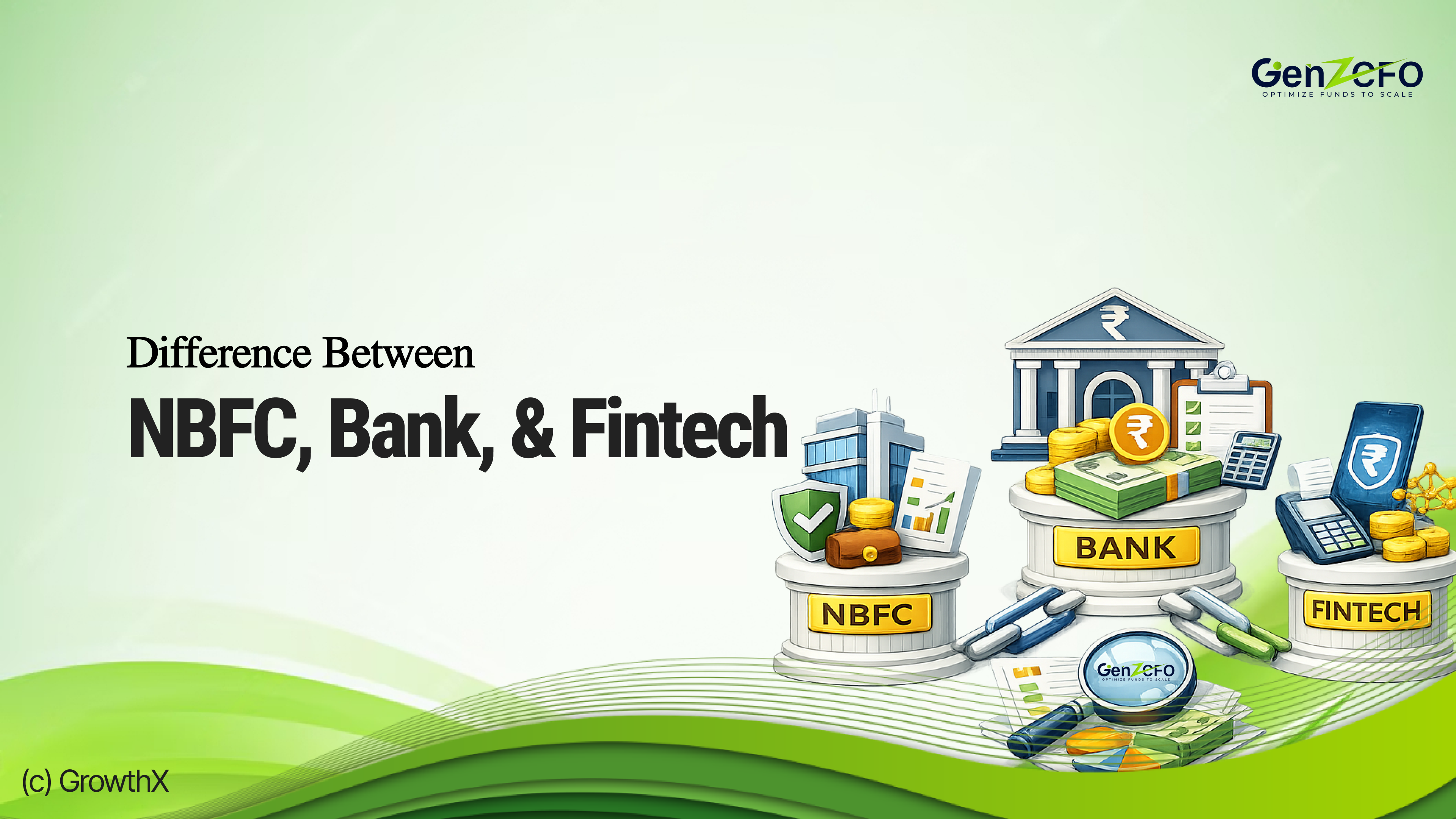
Banks are financial institutions licensed under the Banking Regulation Act, 1949 and regulated by the Reserve Bank of India. Their primary role is to accept deposits from the public and provide loans, advances, and payment services. Banks are legally authorized to accept demand deposits such as savings and current accounts, which distinguishes them from NBFCs and fintech companies. They also participate directly in payment systems like NEFT, RTGS, IMPS, and UPI. Public sector banks, private banks, cooperative banks, and small finance banks are common categories operating in India.
Banks are subject to strict compliance requirements because they handle public money and play an important role in financial stability. RBI imposes norms related to CRR, SLR, capital adequacy, KYC, AML, and priority sector lending. Banks are also covered under deposit insurance schemes, providing protection to depositors. Due to their extensive regulatory obligations, banks maintain higher operational control and stronger governance standards compared to NBFCs and most fintech companies.
In this article, CA Manish Mishra talks about Difference Between NBFC, Bank, and Fintech: Regulatory Perspective.
NBFCs under RBI Regulations
Non-Banking Financial Companies (NBFCs) are financial institutions registered under the Companies Act and regulated by RBI under the RBI Act, 1934. NBFCs mainly provide loans, advances, leasing, hire purchase, investment, and other financial services. Unlike banks, NBFCs cannot accept demand deposits or issue cheques to customers. However, they play a major role in financial inclusion by serving individuals, MSMEs, startups, and sectors that may not easily receive bank credit.
RBI regulates NBFCs through prudential norms, scale-based regulations, and governance standards. Different categories of NBFCs include Investment and Credit Companies, Housing Finance Companies, and NBFC-MFIs. Recent RBI reforms have strengthened supervision over larger NBFCs due to concerns regarding liquidity risk and systemic impact. NBFCs must maintain minimum Net Owned Funds, comply with KYC and AML rules, and follow fair practices codes. Although their regulatory burden is lighter than banks, major NBFCs are now increasingly regulated similarly to banks under RBI’s evolving supervisory framework.
Fintech Companies in India
Fintech companies are technology-driven businesses that provide financial services through digital platforms, mobile applications, artificial intelligence, and online systems. Fintech is not a separate legal category under Indian law. Instead, regulation depends on the activity performed by the company. Some fintech companies operate as payment aggregators, lending platforms, digital wallets, wealth-tech platforms, or insurance marketplaces. Depending on the services offered, they may come under RBI, SEBI, IRDAI, or MCA regulation.
The rapid growth of fintech in India has transformed the financial sector by improving digital payments, financial inclusion, and customer convenience. Government initiatives like Digital India, Aadhaar, and UPI have supported this growth significantly. However, fintech companies also face regulatory scrutiny related to customer data protection, digital lending practices, cybersecurity, and transparency. RBI has recently introduced digital lending guidelines requiring proper disclosure of loan terms, borrower consent, and fair recovery practices. As fintech continues to expand, compliance obligations are becoming stricter to ensure consumer protection and financial stability.
Legal Difference Between NBFC, Bank, and Fintech
The primary legal difference between banks, NBFCs, and fintech companies lies in their licensing structure, permissible activities, and regulatory framework. Banks operate under the Banking Regulation Act, 1949 and are licensed to accept public deposits, issue cheques, and participate directly in payment systems. NBFCs are regulated under the RBI Act, 1934 and mainly focus on lending and investment activities without accepting demand deposits. Fintech companies generally operate as technology-based service providers and may require specific licenses depending on their business model.
Banks face the highest level of regulatory supervision because they handle public deposits and influence the economy directly. NBFCs are also regulated by RBI but with comparatively flexible operational structures. Fintech companies may operate independently or in partnership with banks and NBFCs. Many fintech firms do not hold financial licenses themselves but provide technological support to regulated entities. This distinction creates differences in capital requirements, compliance obligations, customer protection standards, and operational authority among these financial entities.
RBI Regulation of Digital Lending and Fintech
RBI has significantly increased oversight of digital lending and fintech operations in recent years. This regulatory tightening was introduced after concerns regarding hidden charges, unethical recovery practices, and misuse of borrower data by certain digital lending platforms. RBI’s Digital Lending Guidelines require regulated entities and fintech partners to ensure transparency in loan disbursal, repayment mechanisms, and customer communication. The guidelines also mandate direct transfer of loan amounts to borrowers without intermediary pass-through accounts.
The context emphasizes customer consent, data privacy, and fair disclosure of annual percentage rates and other charges. Fintech companies acting as lending service providers must operate under regulated entities such as banks or NBFCs. RBI has also introduced norms regarding outsourcing arrangements, FLDG models, and grievance redressal systems. These measures aim to balance innovation with financial stability and consumer protection. As digital lending expands rapidly in India, RBI continues to strengthen compliance requirements for fintech participants in the lending ecosystem.
Role of KYC and AML Compliance
Know Your Customer (KYC) and Anti-Money Laundering (AML) compliance are essential obligations for banks, NBFCs, and regulated fintech entities. These requirements arise under the Prevention of Money Laundering Act, 2002 and RBI Master Directions on KYC. Financial institutions must verify customer identity, monitor transactions, and maintain records to prevent fraud, money laundering, and terrorist financing activities. Aadhaar-based verification and video KYC processes have simplified onboarding procedures in India.
Banks and NBFCs are required to conduct customer due diligence, report suspicious transactions, and maintain proper transaction records. Fintech companies involved in regulated financial activities must also comply with KYC and AML norms. RBI has imposed strict penalties on institutions violating these compliance obligations. With the increase in digital financial transactions, regulators are focusing heavily on identity verification, fraud monitoring, and cybersecurity controls. Strong KYC and AML systems help maintain trust in the financial sector and protect institutions from regulatory and reputational risks.
Prudential Regulation and Capital Requirements
Prudential regulation refers to the financial and operational safeguards imposed on financial institutions to ensure stability and reduce systemic risk. Banks are subject to strict prudential norms under Basel III standards, including Capital Adequacy Ratio, Liquidity Coverage Ratio, and leverage requirements. Since banks handle public deposits, regulators require them to maintain strong capital buffers and liquidity reserves. RBI closely supervises banks through periodic inspections, stress testing, and reporting obligations.
NBFCs are also required to maintain capital adequacy standards, though the requirements vary depending on their size and category. RBI’s scale-based regulation has introduced stricter compliance for larger NBFCs. Fintech companies that merely provide technology services generally do not face direct prudential regulation unless they engage in regulated financial activities. However, fintech firms partnering with banks or NBFCs indirectly become part of the regulated ecosystem. Prudential regulation helps ensure financial institutions remain solvent, stable, and capable of handling economic shocks or market disruptions.
Consumer Protection Context
Consumer protection has become one of the most important areas of financial regulation in India. Banks, NBFCs, and fintech companies are required to ensure transparency, fair treatment, and proper grievance redressal for customers. RBI has issued various directions relating to fair practices codes, digital lending conduct, customer disclosure norms, and recovery agent behavior. Customers must be informed about loan terms, interest rates, processing fees, and repayment obligations clearly and transparently.
Fintech platforms have particularly faced regulatory attention due to complaints regarding hidden charges, harassment during loan recovery, and unauthorized access to mobile data. RBI has therefore strengthened customer protection norms for digital lending platforms and regulated entities. The Integrated Ombudsman Scheme allows customers to file complaints against banks and regulated financial entities. Strong consumer protection measures increase trust in the financial ecosystem and ensure ethical conduct by financial service providers operating in both traditional and digital environments.
Data Privacy and Cybersecurity Compliance
Data privacy and cybersecurity have become critical regulatory concerns due to the increasing use of digital banking and fintech platforms. Banks, NBFCs, and fintech companies collect sensitive customer information such as Aadhaar details, PAN data, financial records, and transaction history. RBI has therefore introduced cybersecurity frameworks requiring financial institutions to implement strong security controls, fraud detection systems, and incident response mechanisms.
The Digital Personal Data Protection Act, 2023 has further increased obligations regarding lawful processing of personal data and customer consent management. Financial institutions must ensure proper storage, encryption, and handling of customer information. Fintech companies face additional scrutiny because their operations rely heavily on mobile applications, cloud systems, and digital onboarding processes. RBI has also issued guidelines regarding outsourcing of IT services and digital operational resilience. Failure to maintain proper cybersecurity standards can result in regulatory penalties, reputational damage, and financial losses for institutions handling customer data.
Co-Lending and Partnership Models
Co-lending models have become increasingly popular in India’s financial ecosystem. Under this arrangement, banks or NBFCs partner with fintech companies to combine financial resources with technological capabilities. Fintech firms generally handle customer acquisition, digital onboarding, and technology infrastructure, while regulated entities provide the actual loan funding. This model improves credit accessibility and enables faster loan processing, especially for underserved sectors and small borrowers.
RBI has introduced guidelines to regulate co-lending arrangements and ensure accountability of regulated entities. Banks and NBFCs remain responsible for compliance, customer protection, and risk management even when fintech companies are involved operationally. These partnerships have supported the growth of digital lending, Buy Now Pay Later services, and embedded finance products. However, regulators closely monitor such arrangements to prevent regulatory arbitrage and protect borrowers from unfair practices. Proper contractual structures and compliance mechanisms are essential for successful co-lending partnerships.
Account Aggregator Context
The Account Aggregator context is one of India’s major financial sector innovations designed to enable secure and consent-based sharing of financial information. Account Aggregators are NBFCs licensed by RBI that facilitate the transfer of customer financial data between financial institutions. This allows individuals and businesses to share banking, investment, insurance, and tax data digitally with their consent for better financial service access.
The system improves loan approvals, credit assessment, and financial planning while maintaining customer control over personal data. Financial Information Providers and Financial Information Users participate within this regulated ecosystem. The framework supports India’s open banking model and promotes financial inclusion through secure digital infrastructure. RBI regulates Account Aggregators through licensing conditions, data security standards, and governance requirements. The framework is expected to transform India’s financial services sector by improving transparency, reducing paperwork, and enabling more efficient credit delivery mechanisms.
Challenges Faced by Banks, NBFCs, and Fintech Companies
Banks face multiple operational and regulatory challenges, including rising compliance costs, cybersecurity threats, non-performing assets, and technological modernization. Traditional banking systems often struggle to match the speed and flexibility offered by fintech platforms. Regulatory expectations regarding governance, risk management, and customer protection continue to increase, making operations more complex and expensive for banks.
NBFCs face liquidity pressures, funding dependency, and tighter RBI supervision. Large NBFC failures in previous years led regulators to strengthen oversight and prudential norms. Fintech companies, on the other hand, face regulatory uncertainty, data protection obligations, and sustainability concerns regarding digital lending models. Many fintech businesses depend heavily on partnerships with regulated entities. Competition among banks, NBFCs, and fintech firms is intensifying as digital finance grows rapidly. Managing innovation while ensuring compliance remains one of the biggest challenges across the financial services industry.
Recent Regulatory Developments in India
India’s financial regulatory landscape has undergone significant transformation in recent years. RBI introduced Digital Lending Guidelines to improve transparency and customer protection in online lending activities. The Scale-Based Regulatory Framework for NBFCs has imposed stricter governance and capital norms on larger NBFCs. RBI has also tightened rules relating to outsourcing, cybersecurity, and payment aggregators to strengthen financial sector stability.
The implementation of the Digital Personal Data Protection Act, 2023 has introduced additional compliance responsibilities regarding customer data handling and privacy. Regulators are also focusing on artificial intelligence, algorithmic lending systems, and digital operational resilience. RBI recently proposed self-regulatory frameworks for fintech companies to improve industry governance. These developments show that Indian regulators are encouraging innovation while simultaneously ensuring accountability, financial stability, and consumer protection. The regulatory environment is expected to continue evolving as technology-driven financial services expand further.
Future of Financial Regulation in India
The future of financial regulation in India is expected to focus on balancing innovation with regulatory oversight. Banks, NBFCs, and fintech companies are increasingly collaborating through digital partnerships, embedded finance models, and open banking systems. Regulators are gradually moving toward activity-based regulation, meaning that compliance obligations may depend more on the nature of services offered rather than the type of institution providing them.
Emerging technologies such as artificial intelligence, blockchain, and digital public infrastructure will continue transforming financial services. RBI and other regulators are likely to introduce stronger governance frameworks for digital lending, cybersecurity, customer consent management, and algorithmic decision-making. Financial inclusion and responsible innovation will remain important policy objectives. At the same time, regulators will continue emphasizing risk management, consumer protection, and operational resilience. India’s financial ecosystem is therefore expected to become more digitally integrated, highly regulated, and technology-driven in the coming years.
Conclusion
Banks, NBFCs, and fintech companies each play an important role in India’s evolving financial ecosystem. Banks remain the most heavily regulated institutions because they accept public deposits and directly influence monetary stability. NBFCs provide specialized financial services and support financial inclusion, while fintech companies drive innovation through technology-based solutions and digital financial products.
Although their operational models differ, all three sectors are becoming increasingly interconnected through partnerships and digital integration. RBI and other regulators are continuously strengthening compliance frameworks to address risks relating to digital lending, cybersecurity, consumer protection, and data privacy. As India moves toward a more technology-driven economy, understanding the legal and regulatory distinction between banks, NBFCs, and fintech companies becomes essential for businesses, professionals, investors, and consumers operating in the financial services sector.
Frequently Asked Questions (FAQs)
Q1. What is the main difference between a bank and an NBFC?
Ans. Banks can accept demand deposits like savings and current accounts, while NBFCs cannot. Banks operate under stricter RBI regulations and participate directly in payment systems. NBFCs mainly focus on lending, leasing, investment, and financing services without full banking powers.
Q2. Are fintech companies regulated by RBI?
Ans. Yes, fintech companies are regulated by RBI if they provide regulated financial services like digital lending, wallets, or payment aggregation. Depending on their activities, fintech companies may also come under SEBI, IRDAI, or other financial regulatory authorities in India.
Q3. Can NBFCs issue credit cards?
Ans. Certain NBFCs can issue credit cards after obtaining RBI approval and complying with applicable regulations. However, NBFCs cannot provide all banking services and remain restricted compared to banks regarding payment system participation and deposit-related activities.
Q4. Why are banks more heavily regulated?
Ans. Banks are heavily regulated because they handle public deposits and directly affect financial stability. RBI imposes strict norms regarding capital adequacy, liquidity, governance, and customer protection to ensure safety, transparency, and confidence within the banking system.
Q5. What are RBI Digital Lending Guidelines?
Ans. RBI Digital Lending Guidelines ensure transparency and customer protection in digital loans. They require proper disclosure of charges, borrower consent for data access, direct loan disbursal to customers, and fair recovery practices by regulated entities and fintech partners.
Q6. Can fintech companies provide loans directly?
Ans. Fintech companies can directly provide loans only if they hold an NBFC license from RBI. Most fintech companies partner with banks or NBFCs for lending operations while offering technology support, digital onboarding, and customer acquisition services.
Q7. What is the role of KYC compliance?
Ans. KYC compliance helps verify customer identity and prevent fraud, money laundering, and financial crimes. Banks, NBFCs, and regulated fintech companies must follow RBI KYC norms, maintain records, monitor suspicious transactions, and ensure secure customer onboarding procedures.
Q8. Are deposits safer in banks than NBFCs?
Ans. Yes, bank deposits are generally safer because they are protected under deposit insurance schemes like DICGC. Most NBFC deposits do not receive similar protection, making banks comparatively more secure for depositors and retail customers.
Q9. What is the Account Aggregator framework?
Ans. The Account Aggregator framework allows secure and consent-based sharing of financial information between institutions. Regulated by RBI, it improves loan processing, financial planning, and digital banking services while ensuring customers retain control over their personal financial data.
Q10. Can a fintech company become an NBFC?
Ans. Yes, a fintech company can become an NBFC after obtaining RBI registration and fulfilling regulatory requirements such as minimum capital, governance standards, and compliance obligations. Many digital lenders choose this route to expand independent lending operations.
- 27 May, 2026
 CA Manish Mishra
- Easing Finance
CA Manish Mishra is the Co-Founder & CEO at GenZCFO. He is the most sought professional for providing virtual CFO services to startups and established businesses across diverse sectors, such as retail, manufacturing, food, and financial services with over 20 years of experience including strategic financial planning, regulatory compliance, fundraising and M&A.