Search GrowthX Learning Content


Nidhi Company Registration in India: Rules, Process, and Benefits

A Nidhi Company is a special type of public company formed under Section 406 of the Companies Act, 2013, with the core objective of encouraging its members to save and use those savings for mutual benefit. Unlike banks and Non-Banking Financial Companies (NBFCs), a Nidhi Company strictly deals only with its members, accepting deposits from them and providing loans exclusively to them. This member-centric structure ensures a high level of trust, community participation, and transparency in operations.
The regulatory framework of Nidhi Companies is governed by the Companies Act, 2013 and the Nidhi Rules, 2014, which have been further strengthened by amendments in 2019, 2022, and 2024. These rules set clear guidelines on membership, capital requirements, deposits, lending limits, and compliance obligations. By restricting activities to members alone and disallowing risky financial ventures, Nidhi Companies provide a secure, simple, and legally recognized mechanism for promoting thrift and financial inclusion.
In this article, CA Manish Mishra talks about Nidhi Company Registration in India: Rules, Process, and Benefits.
Legal Framework for Nidhi Companies
Companies Act, 2013
The foundation of Nidhi Companies lies in the Companies Act, 2013. Under Section 406, a Nidhi Company is defined as a type of public company established to encourage thrift and savings among members while restricting deposit-taking and lending strictly to members. This section also empowers the Central Government to frame special rules and adapt the provisions of the Act to suit the functioning of Nidhis. Although incorporated as public companies, Nidhis enjoy certain exemptions since their financial activities are confined to members only.
Nidhi Rules, 2014
To operationalize Section 406, the government notified the Nidhi Rules, 2014, which provide detailed compliance norms. These rules cover essential aspects like membership requirements, deposit and loan limits, rules for branch expansion, and filing obligations such as NDH-1, NDH-3, and NDH-4. For instance, a Nidhi must maintain a deposit-to-NOF ratio not exceeding 1:20 and keep 10% of deposits as unencumbered term deposits. These rules act as the regulatory backbone of Nidhi operations.
2019 Amendment – Tightening of Activities
The 2019 amendment was aimed at preventing misuse of the Nidhi structure. It barred Nidhis from engaging in chit funds, hire-purchase, leasing, insurance, and opening current accounts. It also prohibited them from issuing preference shares, debentures, or other debt instruments. By doing so, the amendment ensured that Nidhis remain strictly focused on their mutual benefit purpose and do not venture into unrelated financial activities.
2022 Amendment – NDH-4 Prior Declaration
The 2022 amendment brought significant reforms for depositor protection. It introduced a mandatory requirement for companies intending to function as Nidhis to apply in Form NDH-4 within 120 days of incorporation and obtain a government declaration before accepting deposits. It also established the “fit and proper” test for promoters and directors to check their integrity, reputation, and financial soundness. Additionally, the minimum Net Owned Fund (NOF) requirement was raised from ₹10 lakh to ₹20 lakh, and restrictions were placed on share transfers when loans or deposits are outstanding.
2024 Amendment – Relaxation in Naming Requirement
The 2024 amendment provided practical ease in incorporation. Previously, all Nidhis were required to include “Nidhi Limited” in their name at the time of registration. This rule was relaxed, making it optional during the incorporation stage. However, the suffix “Nidhi Limited” can only be used once the company has been officially recognized as a Nidhi under Section 406. This amendment offered greater flexibility in name approval while preserving safeguards around the use of the term “Nidhi.”
Rules Governing Nidhi Companies
Membership Requirements
A Nidhi Company must maintain a broad base of members to ensure its operations are community-focused. For companies incorporated before 19 April 2022, it is mandatory to have at least 200 members within one year of incorporation. Only individuals can be members, which means that bodies corporate and trusts are not eligible. Additionally, minors are not allowed as members, though deposits may still be held in the name of a minor through a guardian who is already a member. This structure ensures that the activities of a Nidhi Company remain confined to individuals and families, maintaining its mutual benefit character.
Capital and Financial Thresholds
To safeguard financial stability, Nidhis are required to maintain certain capital and liquidity levels. As per the 2022 amendment, the minimum Net Owned Fund (NOF) has been raised to ₹20 lakh. Moreover, the total deposits accepted by a Nidhi cannot exceed 20 times its NOF, which prevents over-exposure and ensures that deposits remain proportionate to the company’s owned funds. In addition, a Nidhi must hold at least 10% of its outstanding deposits as unencumbered term deposits with a scheduled commercial bank or post office. These measures are designed to maintain liquidity and protect the interests of depositors.
Lending Restrictions
Nidhis are restricted to lending only to their members, which distinguishes them from banks and NBFCs. The amount of loan that can be granted depends on the level of deposits held by the Nidhi. The loan limits are fixed under Rule 15 of the Nidhi Rules, 2014: a maximum of ₹2 lakh can be granted if deposits are less than ₹2 crore, ₹7.5 lakh if deposits are between ₹2 crore and ₹20 crore, ₹12 lakh if deposits are between ₹20 crore and ₹50 crore, and ₹15 lakh if deposits are ₹50 crore or more. Additionally, if a Nidhi does not earn profits for three consecutive years, its lending power is restricted. These rules ensure responsible lending and reduce risks of default.
Branch Operations
Branch expansion by a Nidhi Company is allowed only under strict conditions to maintain financial discipline. A Nidhi can open branches only if it has earned profits continuously for the last three financial years. Without prior approval, it may establish up to three branches within the same district. However, if it seeks to open more than three branches or expand to another district or state, it must obtain approval from the Regional Director of the Ministry of Corporate Affairs (MCA). This ensures that expansion is carried out only by financially stable and well-managed Nidhis.
Registration Process for Nidhi Company
Step 1: Incorporation as a Public Company
The registration of a Nidhi Company begins with its incorporation as a Public Limited Company under the Companies Act, 2013. The application is made through the SPICe+ (INC-32) form on the MCA portal. During incorporation, the Memorandum of Association (MOA) and Articles of Association (AOA) must clearly restrict the company’s activities to borrowing and lending only among its members, in line with the mutual benefit principle. Additionally, the name of the company must comply with the Companies (Incorporation) Rules, 2024, which have relaxed the earlier requirement of mandatorily using the suffix “Nidhi Limited” at the time of incorporation. However, the suffix can only be adopted once the company is officially declared a Nidhi under Section 406.
Step 2: Filing NDH-4 for Declaration
After incorporation, a company intending to operate as a Nidhi must apply for recognition by filing Form NDH-4 with the Central Government within 120 days of incorporation. This step is crucial, as a Nidhi can accept deposits only after receiving approval through this declaration. The application must include key attachments such as a list of members (minimum 200 members required for older incorporations), a certificate of Net Owned Fund (NOF) showing a minimum of ₹20 lakh, and the “fit and proper” declarations of all promoters and directors to ensure their credibility. Once approved, the government issues the declaration, formally recognizing the company as a Nidhi.
Step 3: Compliance Filings
Post recognition, a Nidhi must comply with periodic statutory filings. For companies incorporated before April 2022, the first filing is Form NDH-1, which is a return of statutory compliance to be filed within 90 days from the end of the first financial year, detailing membership, deposits, and reserves. In addition, all Nidhis are required to file Form NDH-3, a half-yearly return due within 30 days of the end of each half-year, summarizing deposits and loans. Apart from Nidhi-specific filings, they must also comply with general company law requirements such as AOC-4 (filing of financial statements) and MGT-7 (annual return) under the Companies Act, 2013. These compliance obligations ensure that the operations of a Nidhi remain transparent, well-monitored, and aligned with regulatory safeguards.
Restrictions under Rule 6 of Nidhi Rules, 2014
Carrying on chit funds, hire purchase, leasing, or insurance business
A Nidhi Company is strictly created for the purpose of mutual borrowing and lending among its members. To prevent misuse, Rule 6 prohibits it from engaging in other financial activities such as chit funds, hire-purchase financing, leasing, or insurance. These activities fall under the domain of specialized regulatory frameworks like the Chit Funds Act or the Insurance Act and could expose members’ savings to unnecessary risk. This restriction ensures that Nidhis remain focused on their core objective and do not act like NBFCs or banks.
Issuing preference shares, debentures, or other debt instruments
Nidhis are not allowed to raise funds from the public or even from members through instruments like preference shares, debentures, or bonds. Their capital base must come from equity shares subscribed by members and deposits accepted only from members. This restriction safeguards depositors by preventing Nidhis from leveraging complex financial instruments and ensures transparency in their funding structure.
Opening current accounts with members
Unlike banks, a Nidhi cannot allow members to open current accounts. This is because Nidhis are not meant to operate as full-fledged banking institutions offering transactional facilities. They are designed for thrift and credit purposes only, which means services like savings deposits, fixed deposits, and loans to members are allowed, but current account operations are prohibited.
Engaging in partnerships for lending/borrowing
Rule 6 also prohibits Nidhis from entering into partnerships or joint ventures with other entities for lending or borrowing activities. All financial transactions must be confined strictly between the Nidhi and its members. This ensures that outside entities cannot influence or misuse the resources of the Nidhi and keeps the institution purely member-driven.
Acquiring securities of another company
A Nidhi is not permitted to acquire or hold shares, debentures, or securities of any other company. The objective of this restriction is to ensure that members’ funds are not diverted into speculative investments. Since the purpose of a Nidhi is to promote savings and provide credit to members, investing in other companies would expose it to market risks, which goes against the safe and mutual-benefit principle.
Benefits of Nidhi Company
Easy Formation and Compliance
A Nidhi Company is relatively simple to form compared to other financial entities like Non-Banking Financial Companies (NBFCs). It is registered as a Public Limited Company under the Companies Act, 2013, but enjoys certain exemptions since its activities are limited to members only. Unlike NBFCs, which require RBI registration and strict compliance with complex financial regulations, Nidhis are regulated by the Ministry of Corporate Affairs (MCA) through the Nidhi Rules, 2014. This makes the compliance process smoother, less costly, and more accessible for small groups intending to create a community-based savings and lending institution.
Member-Centric Model
The operations of a Nidhi Company are strictly confined to its members. Deposits can be accepted only from members, and loans can be granted only to members. This closed-loop structure ensures transparency, accountability, and safety, as transactions occur within a trusted group of individuals. By avoiding dealings with the general public, Nidhis reduce the risks associated with large-scale financial institutions and focus instead on mutual benefit.
Low Capital Requirement
One of the major advantages of a Nidhi Company is its low entry barrier in terms of capital. As per the 2022 amendment, the minimum Net Owned Fund (NOF) requirement has been set at ₹20 lakh, which is still significantly lower than the high capital requirements for NBFCs seeking RBI approval. This makes Nidhis an attractive option for small entrepreneurs or community groups who want to set up a financial cooperative without the burden of heavy capital investment.
Community-Oriented Savings
Nidhis are designed to promote thrift and mutual support within a community. By pooling savings from members and redistributing them as loans to those in need, they help members achieve financial stability and reduce dependence on external moneylenders. This model strengthens community bonds and fosters a culture of disciplined savings, creating a secure and supportive financial environment for all members involved.
Regulatory Recognition
Although simpler than NBFCs, Nidhi Companies are still subject to supervision by the Ministry of Corporate Affairs (MCA). This ensures legal recognition, credibility, and accountability. Operating under statutory provisions like Section 406 of the Companies Act, 2013 and the Nidhi Rules, 2014, Nidhis are transparent and trustworthy entities. Members and depositors can therefore have confidence that their savings and transactions are being handled within a recognized legal framework, providing assurance of legitimacy and security.
Recent Updates
2022 Amendment – Stricter Recognition and Governance
The Nidhi (Amendment) Rules, 2022 brought in significant changes to tighten regulation and ensure depositor safety. One of the most important introductions was Form NDH-4, which made it mandatory for companies aspiring to function as Nidhis to apply for government recognition within 120 days of incorporation. Without this approval, such companies cannot accept deposits. The amendment also introduced the “fit and proper” criteria for promoters and directors, requiring them to have a clean record in terms of integrity, financial soundness, and reputation. Furthermore, the minimum Net Owned Fund (NOF) requirement was increased from ₹10 lakh to ₹20 lakh, raising the financial credibility bar. These measures collectively aimed at filtering out non-serious players and safeguarding members’ interests.
2024 Amendment – Relaxation in Naming Requirement
The Companies (Incorporation) Amendment Rules, 2024 addressed a practical challenge faced during the incorporation process. Earlier, it was compulsory for companies intending to be registered as Nidhis to include the words “Nidhi Limited” in their name at the time of incorporation. This rule was relaxed, and the amendment made it optional during incorporation, allowing promoters more flexibility in choosing names. However, the suffix “Nidhi Limited” can only be used once the company has been officially declared a Nidhi under Section 406 of the Companies Act, 2013. This amendment simplified the name approval process while still preserving safeguards for genuine Nidhis.
Focus on Depositors’ Protection
Both amendments reflect a growing emphasis on protecting depositors’ interests. The 2022 amendment enhanced regulatory scrutiny by introducing prior approval, higher capital requirements, and promoter checks, while the 2024 amendment balanced this by easing procedural hurdles without compromising depositor safety. Together, these reforms strengthen oversight, ensure transparency in operations, and provide confidence that Nidhis are managed responsibly under the watch of the Ministry of Corporate Affairs.
Conclusion
A Nidhi Company is a well-recognized legal structure designed to encourage savings and provide credit facilities within a restricted circle of members. It functions under Section 406 of the Companies Act, 2013 and the Nidhi Rules, 2014, which together set out strict guidelines on membership, capital, deposits, lending, and compliance filings. The model ensures that the mutual benefit principle remains at its core, while regulatory safeguards protect members’ funds from misuse.
Entrepreneurs looking to form a Nidhi Company must complete incorporation through SPICe+, file NDH-4 for government declaration, and maintain the required ₹20 lakh Net Owned Fund along with compliance obligations. This structure is particularly useful for small borrowers and community-based savings groups, combining ease of formation with robust depositor protection, transparency, and legal recognition.
Frequently Asked Questions (FAQs)
Q1. What is a Nidhi Company?
Ans. A Nidhi Company is a public company incorporated under Section 406 of the Companies Act, 2013. It promotes savings among members and provides credit facilities only within its membership circle. Its operations are governed by the Nidhi Rules, 2014, ensuring mutual benefit, transparency, and depositor protection.
Q2. How is a Nidhi Company different from an NBFC?
Ans. Nidhi Companies differ from NBFCs because they are regulated by the Ministry of Corporate Affairs, not RBI. They deal exclusively with members, accepting deposits and granting loans only to them. NBFCs serve the general public, require RBI approval, and follow stricter compliance norms than Nidhi Companies.
Q3. What are the basic requirements for registering a Nidhi Company?
Ans. To register a Nidhi, you need a minimum of seven members and three directors. A Net Owned Fund of ₹20 lakh is required, along with incorporation through SPICe+. Within 120 days, Form NDH-4 must be filed to obtain government declaration before accepting member deposits.
Q4. Can a Nidhi Company accept deposits from non-members?
Ans. No, a Nidhi Company cannot accept deposits from non-members. Its operations are strictly limited to its registered members, ensuring community-driven activities. Deposits and lending within a closed group provide higher safety and trust, keeping transactions transparent and aligned with the mutual benefit model of Nidhi Companies.
Q5. What are the lending limits for a Nidhi Company?
Ans. Loan limits depend on deposit size. A Nidhi may lend up to ₹2 lakh if deposits are below ₹2 crore, and as deposits grow, limits scale up to ₹15 lakh. These caps ensure lending is proportionate to resources, reducing risk and protecting members’ deposited savings.
Q6. Is it compulsory to use “Nidhi Limited” in the company name?
Ans. Earlier, “Nidhi Limited” was mandatory at incorporation. However, the 2024 amendment made it optional during registration. Companies can adopt the suffix “Nidhi Limited” only after being formally declared a Nidhi under Section 406, ensuring only recognized institutions use the designation for credibility and depositor trust.
Q7. What returns and filings must a Nidhi Company submit?
Ans. Nidhis must file NDH-3 (half-yearly return) showing deposit and loan status, and NDH-1 for older incorporations. Additionally, they must submit annual company law filings like AOC-4 for financial statements and MGT-7 for annual return. These filings ensure transparency, compliance, and proper monitoring of their financial activities.
Q8. What are the benefits of forming a Nidhi Company?
Ans. The main benefits are easy formation, simpler compliance compared to NBFCs, and a low capital requirement of ₹20 lakh. Nidhis provide community-based savings and credit, operate under MCA supervision, and are legally recognized entities, giving depositors confidence and entrepreneurs a cost-effective financial cooperative model for growth.
- 24 Sep, 2025
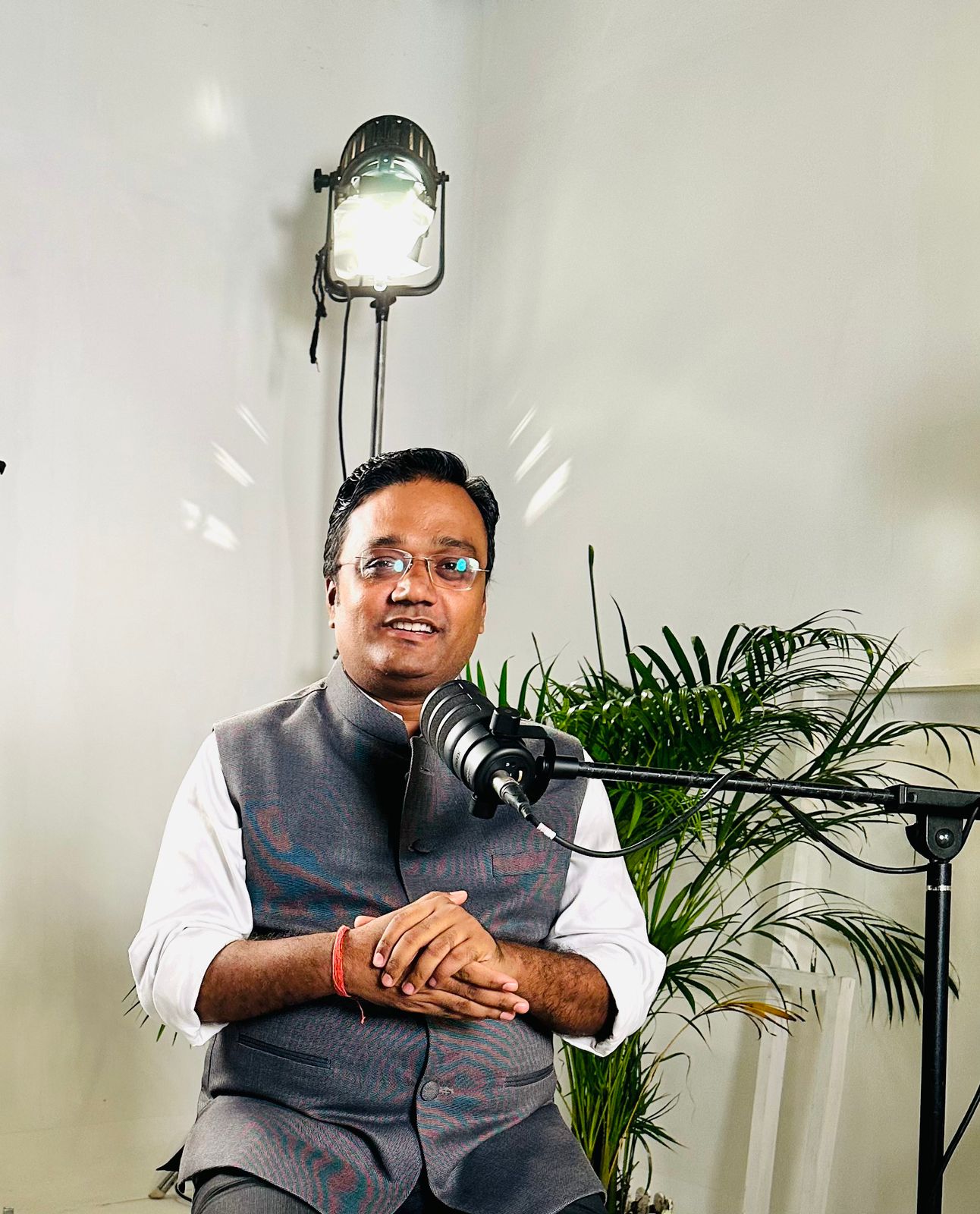 CA Manish Mishra
- Starting Up
CA Manish Mishra is the Co-Founder & CEO at GenZCFO. He is the most sought professional for providing virtual CFO services to startups and established businesses across diverse sectors, such as retail, manufacturing, food, and financial services with over 20 years of experience including strategic financial planning, regulatory compliance, fundraising and M&A.