Search GrowthX Learning Content


No More Free UPI: A Finance & Growth Playbook for NBFCs

India’s UPI ecosystem is entering a new phase as digital payments move from rapid expansion toward a more sustainable commercial model. While headlines suggest that UPI is no longer free, the reality is more specific. Person-to-person UPI transactions continue to remain free, while merchant payments up to ₹2,000 are also generally outside the MDR structure. The change primarily affects certain higher-value person-to-merchant transactions, where Merchant Discount Rate (MDR) may now apply. Most everyday UPI transactions therefore remain unaffected.
For NBFCs, this change is more than a payment-processing issue. It requires lenders to understand transaction classifications, evaluate collection costs and reassess the economics of digital repayments. At the same time, it creates opportunities to improve payment efficiency, strengthen digital collections and develop better merchant-focused lending strategies. NBFCs that optimise payment partnerships and integrate payment data into lending decisions can turn changing UPI economics into a long-term growth opportunity.
In this article, CA Manish Mishra talks about No More Free UPI: A Finance & Growth Playbook for NBFCs.
What Has Actually Changed in UPI?
Under the new, ordinary users do not have to pay transaction fees simply for using UPI. Person-to-person transactions continue to remain free regardless of value, while merchant payments up to ₹2,000 also remain outside MDR. For specified person-to-merchant transactions above ₹2,000, an MDR of 0.4% may apply, with a cap of ₹300 for transactions of ₹75,000 and above. Certain sectors, including railways, telecom, insurance, fuel and agricultural inputs, may follow separate fee structures, while some capital-market transactions attract different rates.
The MDR should be understood as a payment-processing charge within the digital payments ecosystem rather than a tax collected by the Government. For NBFCs, the key issue is therefore not whether every UPI repayment will attract a 0.4% charge. The real focus should be on how repayment and collection transactions are classified, which categories attract MDR, and how those costs affect overall lending and collection economics.
Why the UPI MDR Discussion Matters to NBFCs
NBFCs increasingly operate through digital journeys. Customers may discover a loan online, complete KYC digitally, receive funds directly into their bank accounts and make repayments electronically. UPI has become particularly useful because it can reduce friction in collections. A borrower can receive a payment reminder, open the lender’s application, click a payment link or scan an authorised QR code and complete the transaction within seconds.
For lenders handling millions of transactions, however, even a small increase in payment-processing cost can become meaningful. A cost that appears negligible on one transaction can turn into a substantial annual operating expense when applied across a large portfolio. This is why NBFCs should look beyond the percentage mentioned in the MDR announcement and undertake transaction-level analysis. They should know the value of UPI collections processed each month, average repayment size, percentage of repayments below and above ₹2,000, payment category assigned by the acquiring bank, cost charged by payment partners, transaction failure rates, reconciliation expenses and recovery cost associated with alternative payment modes. The new payment economics make this data increasingly important.
The First Play: Build a Payment Cost Map
The first response of an NBFC should not be to increase borrower charges. It should be to understand its existing payment architecture. Many organisations know their overall payment gateway bill but do not maintain a sufficiently granular view of the cost associated with each collection channel. That approach will become inadequate.
An NBFC should create a payment cost map covering UPI, NACH or eNACH mandates, debit cards, net banking, BBPS wherever applicable, payment gateways, account transfers and other permitted collection mechanisms. For each channel, management should compare direct processing cost, failure rate, settlement time, reconciliation effort, fraud risk, customer experience and collection success rate.
The cheapest payment option is not necessarily the most profitable. Suppose a payment mode costs ₹2 less per transaction but experiences significantly higher failure rates. If a failed transaction leads to another reminder, customer-support call, recovery attempt or delinquency, the apparent saving disappears quickly. The better metric is total cost per successful collection. That figure provides a much more useful basis for management decisions.
The Second Play: Recalculate Loan-Level Unit Economics
For years, fintech lenders and digitally oriented NBFCs have focused heavily on customer acquisition cost, cost of funds, expected credit loss and operational expenditure. Payment acceptance costs now deserve a clearer place in this calculation. Consider a simplified example. An NBFC originates a short-duration loan of ₹20,000. If the customer makes several instalment repayments digitally, any payment-processing cost must ultimately fit within the economics of that loan.
The organisation should calculate:
Net Contribution = Interest and Permitted Fees – Cost of Funds – Expected Credit Loss – Acquisition Cost – Servicing Cost – Collection Cost – Payment Infrastructure Cost
The objective is not to find ways to transfer every new cost to borrowers. It is to identify loan products, borrower segments or repayment structures where the margin is so thin that a small operating-cost increase materially changes profitability. This is particularly important for small-ticket digital credit, where revenue per account can be limited while customer-acquisition and servicing expenses remain significant.
The Third Play: Do Not Automatically Pass MDR to Borrowers
This is one of the most important compliance considerations. The Government has specifically clarified that MDR is a charge within the merchant payment ecosystem and not a transaction charge payable by customers. It has also stated that banks should ensure merchants do not pass the MDR to customers and that UPI application providers should not levy hidden platform charges.
For NBFCs, the lesson is straightforward: a new payment cost does not automatically create the right to introduce a new borrower fee. Any borrower-facing charge must be examined separately under applicable RBI requirements, contractual documentation, the Key Facts Statement, Annual Percentage Rate disclosures and fair-practice obligations.
RBI’s regulatory approach to digital lending places significant emphasis on transparent disclosure of the all-inclusive cost of credit. RBI has also required digital loan servicing and repayment to move directly into the regulated entity’s bank account rather than through unauthorised third-party pool accounts. NBFCs should therefore involve compliance, finance, legal and product teams before making any change to the customer journey. A ₹5 operational cost hidden inside an unexplained “convenience charge” may create a much larger conduct risk than the amount saved.
The Fourth Play: Improve Repayment Success Rather Than Merely Cutting Payment Cost
The strongest response to increasing payment infrastructure costs may actually be better collection efficiency. Suppose an NBFC processes 100,000 repayment attempts. Improving the successful repayment rate by even a small percentage can generate more financial value than negotiating a few basis points from the payment processor. This shifts the conversation from payment price to payment performance.
NBFCs should examine why transactions fail. Is the customer’s bank balance insufficient? Is the UPI collect request expiring? Are customers receiving reminders at inconvenient times? Are payment links difficult to navigate? Are mandate failures being followed by an effective alternative payment route? Is reconciliation taking too long?
Better use of behavioural analytics can also help determine the most appropriate reminder time, repayment channel and communication frequency for different borrower groups. The goal should be a low-friction repayment journey without aggressive or misleading collection practices.
The Fifth Play: Treat UPI Data as a Business Intelligence Layer
UPI is not only a payment mechanism. The behaviour surrounding digital repayments can also reveal important operational patterns. NBFCs can analyse aggregate repayment behaviour to understand when customers tend to pay, which channels have the best completion rates, which loan products experience more payment failures and how quickly customers cure failed instalments.
This information can improve treasury planning, collections forecasting and product design. However, payment data must not become an excuse for indiscriminate data harvesting. RBI’s digital lending regime requires need-based data collection, appropriate consent and responsible handling of borrower information. The growth opportunity therefore lies in better use of legitimate first-party and consented data—not uncontrolled access to a customer’s financial life.
The Sixth Play: Rethink Merchant and MSME Lending Opportunities
The new UPI economics also create an opportunity on the lending side. Millions of Indian merchants already operate digitally. Their payment histories can contribute to a richer understanding of business activity when such information is lawfully available and appropriately used. For NBFCs serving MSMEs, merchants and small businesses, this may support more efficient cash-flow-based underwriting.
Instead of depending only on traditional collateral, physical documentation or lengthy bank-statement analysis, lenders can increasingly work with verified digital financial information, subject to applicable consent and regulatory requirements. This trend is consistent with the broader development of data-driven credit infrastructure in India. RBI has highlighted expansion of the Unified Lending Interface and noted growing participation by banks and NBFCs in digital loan journeys supported by standardised access to data services. For NBFCs, the commercial opportunity is substantial: payment digitisation can make previously difficult-to-assess businesses more visible to formal credit systems.
The Seventh Play: Develop Smarter Merchant Finance Products
An NBFC serving merchants should not view MDR solely as a merchant expense. For many businesses, digital acceptance improves transaction traceability, cash-flow visibility and financial records. Those advantages can support working-capital assessment. This creates space for products such as merchant cash-flow loans, invoice-linked working capital, short-tenure business loans, supply-chain finance and embedded credit facilities.
A merchant processing significant digital payments may prefer a lender that understands seasonal turnover rather than one relying only on conventional financial statements. NBFCs capable of combining compliant data access, strong underwriting and fast servicing may therefore find new growth segments emerging from the same payment ecosystem that is creating additional processing costs.
The Eighth Play: Renegotiate Payment Partnerships
The introduction of MDR should trigger a commercial review of payment contracts. NBFCs processing significant transaction volumes have bargaining power. Management should review pricing slabs, settlement timelines, refund charges, reconciliation services, technical support, API performance, failed-transaction handling and reporting functionality.
Headline MDR should not be the only point negotiated. For example, a provider offering slightly higher pricing but superior success rates, automated reconciliation and real-time reporting may reduce total operational costs. Conversely, a platform with low published pricing but frequent transaction failures or manual settlement issues can become expensive. Payment partner performance should therefore become part of vendor governance.
The Ninth Play: Build Payment Resilience
Depending entirely on a single payment rail creates operational concentration risk. UPI can remain a major repayment option, but NBFCs should maintain permitted alternatives so a temporary technical disruption does not stop collections. Payment resilience involves multiple banking relationships, reliable mandate infrastructure, fallback payment options, real-time reconciliation systems, clear incident-management procedures and appropriate customer communication.
This is also increasingly important because digital finance operates at scale. A short outage affecting thousands of customers can quickly become a servicing and reputational issue. The payment function must therefore be treated as part of operational resilience—not merely as a checkout feature.
The Tenth Play: Turn Payments Into a Strategic Finance Function
Historically, payment processing was often managed as an operational activity. That should change. For a digitally active NBFC, payment infrastructure sits at the intersection of finance, product, collections, technology, compliance and customer experience. The Chief Financial Officer may care about payment cost.
The Chief Technology Officer may care about API uptime. The collections team may care about transaction success rates. Compliance teams may care about disclosures and repayment routing. Product teams may care about customer friction. All of these perspectives must be connected. A monthly payments dashboard should therefore track processing cost, successful collections, technical failures, settlement delays, fraud losses, reconciliation exceptions, payment-partner performance and customer complaints. Once management sees payments through this integrated lens, a small regulatory change becomes an opportunity to improve the entire lending model.
A Simple NBFC Impact Illustration
The effect of MDR can differ substantially based on the nature and classification of transactions.
|
Scenario |
Possible Business Impact |
|
Borrower-to-borrower or ordinary P2P transfer |
Outside merchant MDR |
|
Merchant UPI payment up to ₹2,000 |
Zero MDR under the announced |
|
Specified P2M payment above ₹2,000 |
0.4% MDR may apply |
|
P2M transaction of ₹75,000 or more |
MDR capped at ₹300 under the general category |
|
Payment involving protected/special category |
Separate rate may apply |
|
NBFC repayment or collection flow |
Classification should be verified with the acquiring bank/payment provider rather than assumed |
This final point is particularly important for lenders. NBFCs should not automatically assume that every UPI-based EMI or loan repayment is subject to the general 0.4% merchant MDR. The treatment depends on the actual payment architecture, category and rules applied by the acquiring bank or payment service provider.
Compliance Must Remain at the Centre of the Growth Strategy
Cost optimisation cannot override borrower protection. RBI’s digital lending places responsibility on the regulated entity even where Lending Service Providers or technology partners participate in the customer journey. Loan servicing and repayment arrangements, disclosure of costs, customer consent, data handling and grievance mechanisms all require careful control.
NBFCs evaluating new payment strategies should therefore check four issues before implementation: whether the payment flow complies with RBI requirements, whether borrower-facing charges are properly permitted and disclosed, whether customer data is collected and used lawfully, and whether outsourcing arrangements preserve the NBFC’s regulatory responsibility. Payments should become smarter, but they should not become less transparent.
From “Free Payments” to Sustainable Digital Finance
The deeper significance of the UPI MDR change is not simply that certain merchants may now incur a payment cost. It marks the evolution of UPI from a system focused primarily on adoption and scale towards one that must also fund infrastructure, innovation, security and resilience.
The Government has explained that revenue from eligible merchant transactions is intended to support banks, payment service providers and UPI application providers in maintaining and expanding the ecosystem. It has also provided for a dedicated fund supported by a portion of MDR collections to encourage continued adoption among small merchants. For NBFCs, this transition mirrors the evolution of digital lending itself.
The first phase of fintech competition was largely about speed: faster onboarding, faster KYC, faster underwriting and faster disbursement. The next phase will increasingly be about sustainable economics. The NBFCs that succeed will be those capable of controlling acquisition costs, funding costs, credit losses, servicing expenses and payment costs simultaneously without weakening customer protection.
Conclusion
“No More Free UPI” may sound like a major shift, but the actual impact is more limited and targeted. UPI continues to remain free for person-to-person transactions, while payments up to ₹2,000 generally continue to enjoy zero MDR. The key change relates mainly to certain higher-value merchant transactions, where a structured MDR mechanism supports the sustainability of India’s expanding digital payment ecosystem. For NBFCs, this development should be viewed as an opportunity to review payment costs, transaction classifications and collection strategies rather than simply passing additional expenses on to borrowers.
NBFCs can respond by improving repayment success rates, renegotiating payment partnerships, strengthening digital collection systems and using consent-based financial data more effectively. Payments should increasingly become part of the overall lending and growth strategy rather than remain a back-office function. With careful cost management and compliant digital innovation, NBFCs can continue using UPI to achieve faster collections, better visibility and scalable, data-driven lending growth.
Frequently Asked Questions (FAQs)
Q1. Is UPI no longer free in India?
Ans. No. UPI continues to remain free for person-to-person transactions, and merchant payments up to ₹2,000 generally remain outside MDR. The new mainly introduces charges on certain higher-value person-to-merchant transactions.
Q2. What is MDR on UPI transactions?
Ans. Merchant Discount Rate, or MDR, is a fee charged within the payment ecosystem for processing certain merchant transactions. Under the new, specified UPI merchant transactions above ₹2,000 may attract an MDR of 0.4%, subject to applicable categories and caps.
Q3. Will customers have to pay extra for making UPI payments?
Ans. Ordinary customers are not supposed to be charged MDR merely for making eligible UPI payments. MDR is primarily a merchant-side payment-processing charge and should not automatically be passed on to customers as an additional fee.
Q4. How can the new UPI MDR affect NBFCs?
Ans. NBFCs using UPI for loan repayments, collections or merchant-related payment flows may experience additional payment-processing costs depending on how transactions are classified. This can affect collection economics, operating expenses and margins, particularly in high-volume digital lending models.
Q5. Does every UPI loan repayment attract MDR?
Ans. Not necessarily. The applicability of MDR depends on the nature of the transaction, payment architecture, merchant classification and the rules applied by the acquiring bank or payment service provider. NBFCs should verify their specific repayment flows rather than assuming a uniform charge.
Q6. Can an NBFC recover UPI MDR from borrowers?
Ans. An NBFC should not automatically pass payment-processing costs to borrowers. Any borrower-facing charge must comply with RBI regulations, loan agreements, Key Facts Statement requirements, APR disclosures and applicable fair-practice standards.
Q7. How can NBFCs reduce the impact of UPI payment costs?
Ans. NBFCs can analyse transaction-level costs, improve repayment success rates, negotiate better terms with payment providers and maintain alternative repayment channels. The objective should be to reduce the total cost per successful collection rather than simply choosing the cheapest transaction method.
Q8. Why should NBFCs review their payment partnerships?
Ans. Payment partners differ in pricing, settlement speed, transaction success rates, API performance, reconciliation support and reporting capabilities. Regular vendor reviews can help NBFCs identify whether their existing payment arrangements remain commercially efficient.
Q9. Can UPI data help NBFCs improve lending decisions?
Ans. Digital payment behaviour can provide useful insights into repayment patterns and business cash flows when the information is lawfully obtained and used with appropriate consent. Such data may support better underwriting, collections planning and merchant-focused lending products.
Q10. What opportunities can UPI create for MSME-focused NBFCs?
Ans. Increasing digital payments can improve visibility into merchant turnover and cash-flow patterns. This may help NBFCs develop products such as working-capital loans, merchant financing, supply-chain finance and cash-flow-based credit for MSMEs.
- 22 Sep, 2026
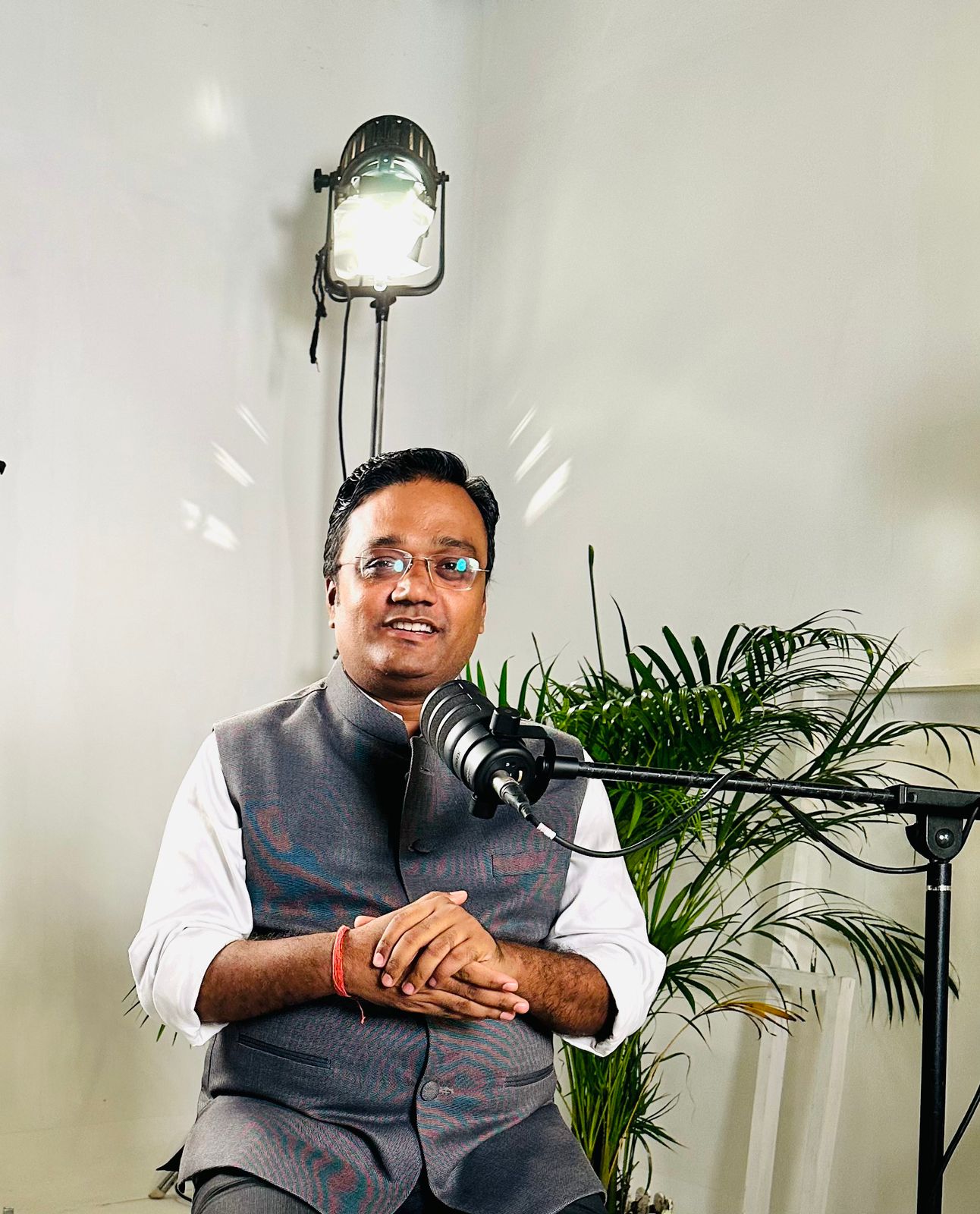 CA Manish Mishra
- Easing Finance
CA Manish Mishra is the Co-Founder & CEO at GenZCFO. He is the most sought professional for providing virtual CFO services to startups and established businesses across diverse sectors, such as retail, manufacturing, food, and financial services with over 20 years of experience including strategic financial planning, regulatory compliance, fundraising and M&A.