Search GrowthX Learning Content


Placement Memorandum Requirements for AIF Registration
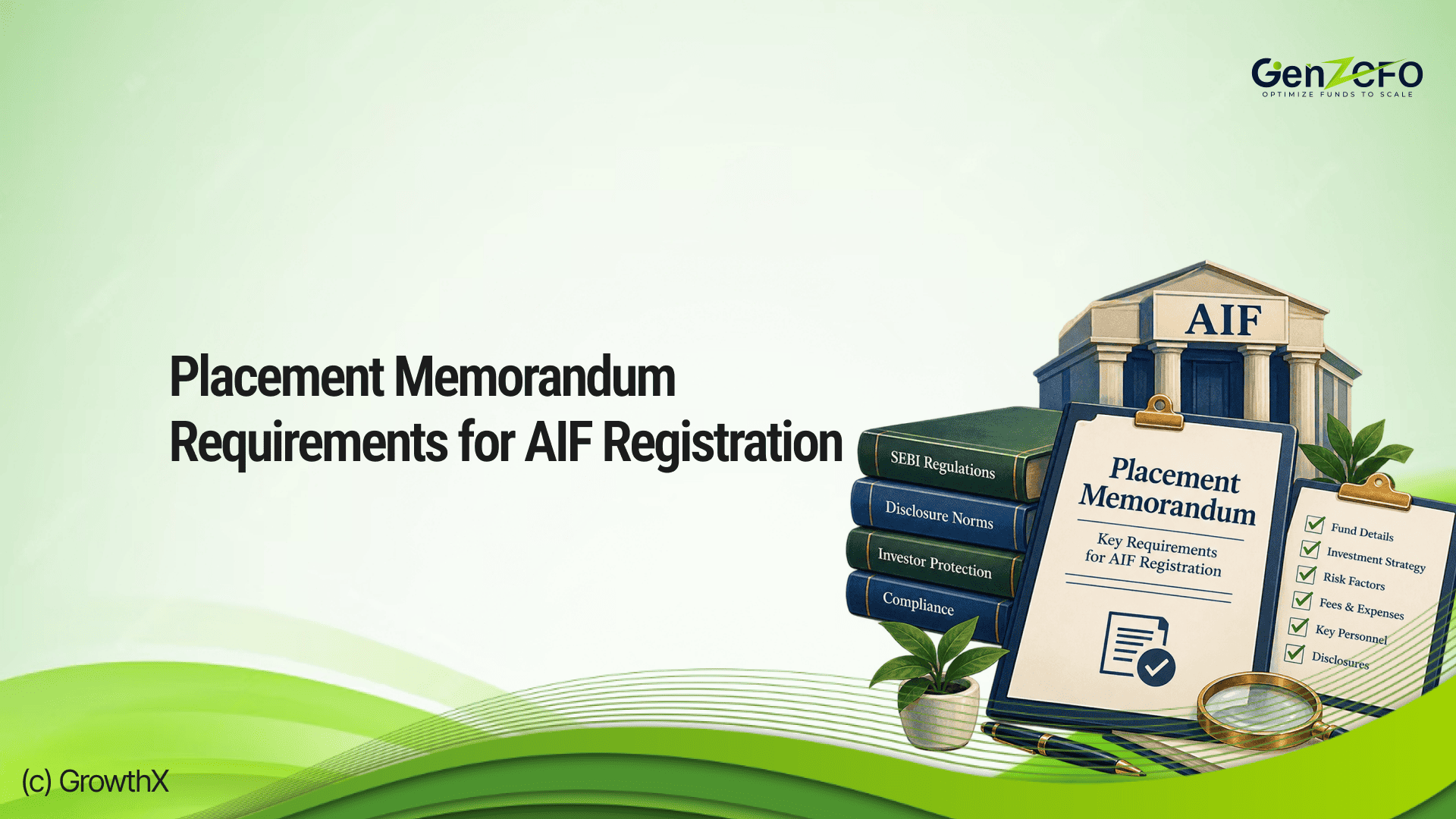
Alternative Investment Funds (AIFs) have become a significant investment structure in India for investors seeking exposure to investment opportunities beyond traditional financial products. AIFs provide access to diverse asset classes such as private equity, venture capital, infrastructure projects, real estate, private credit, and other alternative investment opportunities. These funds are managed by professional fund managers who collect capital from eligible investors and deploy it according to a predefined investment strategy.
To establish and operate an AIF in India, the fund must obtain registration from the Securities and Exchange Board of India (SEBI) under the SEBI (Alternative Investment Funds) Regulations, 2012. One of the most important documents required during the AIF registration process is the Placement Memorandum (PPM). The Placement Memorandum serves as a detailed disclosure document that explains the structure, objectives, investment strategy, risks, expenses, governance mechanism, and operational of the fund. It enables investors to understand the investment opportunity and make informed decisions before committing their capital.
In this article, CA Manish Mishra talks about Placement Memorandum Requirements for AIF Registration.
What is a Placement Memorandum (PPM)?
A Placement Memorandum (PPM) is a comprehensive document prepared by an Alternative Investment Fund to provide detailed information to prospective investors regarding the proposed fund. It contains all material facts and disclosures that may influence an investor’s decision to invest in the AIF.
The PPM explains important aspects such as the investment objective of the fund, targeted investment areas, fund management approach, risk factors, fee structure, investor rights, and exit mechanisms. Since AIF investments generally involve higher risk and longer investment horizons compared to traditional investment products, detailed disclosures through the PPM are necessary to ensure transparency. The Placement Memorandum also acts as a communication document between the fund manager and investors by clearly defining the terms, conditions, and expectations associated with the investment.
Regulatory Structure Governing Placement Memorandum
The preparation and submission of the Placement Memorandum for AIF registration are governed by the SEBI (Alternative Investment Funds) Regulations, 2012 along with various circulars and guidelines issued by SEBI from time to time. SEBI has introduced standardized disclosure requirements for AIF Placement Memorandum to ensure consistency and transparency across different categories of funds.
These requirements help investors receive complete information before investing and allow SEBI to evaluate whether the proposed fund structure complies with regulatory requirements. The regulatory requires AIFs to disclose all relevant information honestly and completely. Any misleading information, omission of material facts, or inadequate disclosure may create compliance issues and regulatory concerns.
Importance of Placement Memorandum in AIF Registration
Investor Transparency and Protection
The primary purpose of a Placement Memorandum is to protect investors by providing complete information about the proposed fund. Since AIFs invest in complex and alternative asset classes, investors need detailed information regarding how their money will be managed and what risks are involved. The PPM provides clarity about the investment strategy, expected fund performance, associated risks, charges, and operational structure. This enables investors to evaluate whether the fund aligns with their investment objectives and risk appetite.
Regulatory Review by SEBI
During the AIF registration process, SEBI reviews the Placement Memorandum to ensure that the proposed fund complies with applicable regulations. SEBI examines whether mandatory disclosures have been provided and whether the investment strategy, governance, and operational structure are properly explained. A properly prepared PPM helps in reducing regulatory queries and facilitates a smoother registration process.
Risk Disclosure and Awareness
Alternative investments may involve risks such as market fluctuations, limited liquidity, regulatory changes, and investment-specific uncertainties. Therefore, the Placement Memorandum must clearly explain all potential risks associated with the fund. Proper risk disclosure ensures that investors understand possible challenges before making investment commitments and prevents unrealistic expectations regarding returns.
Key Requirements of Placement Memorandum for AIF Registration
Cover Page and Basic Fund Information
The Placement Memorandum should begin with basic information about the proposed Alternative Investment Fund. The cover page generally includes the name of the fund, category of AIF, details of the Sponsor, Investment Manager, Trustee, registered office address, and contact details. It should also contain appropriate disclaimers stating that investment in AIFs involves risks and that the document is intended only for eligible investors. The purpose of the cover page is to provide clear identification of the fund and establish the nature of the investment opportunity being offered.
Executive Summary of the Fund
The executive summary provides a brief overview of the proposed AIF and helps investors understand the fundamental concept of the fund. It explains the purpose behind establishing the fund, the targeted investment areas, expected corpus, investment period, and broad investment strategy. A well-prepared executive summary should provide investors with a clear understanding of the fund’s objectives without creating misleading expectations. It should highlight the key features of the fund in a simple and understandable manner.
Details of Alternative Investment Fund Structure
Legal Structure of the Fund
The Placement Memorandum must clearly mention the legal structure under which the AIF has been established. An AIF may generally be formed as a trust, company, or limited liability partnership depending on the requirements of the fund. The PPM should explain the legal governing the fund and provide details regarding registration, establishment documents, and applicable regulatory requirements.
Role of Sponsor, Trustee and Investment Manager
The PPM must clearly explain the responsibilities of different parties involved in managing the AIF. The Sponsor is responsible for establishing the fund and ensuring regulatory compliance, while the Investment Manager manages investment decisions and daily operations. The Trustee, where applicable, oversees the activities of the fund and ensures that the fund operates in accordance with applicable regulations and the interests of investors.
Investment Objective and Strategy
Investment Objective
The investment objective defines the overall purpose and goals of the AIF. It explains what type of assets the fund intends to invest in and what investment opportunities it aims to identify. For example, a venture capital fund may focus on investing in early-stage startups, whereas a private equity fund may focus on established businesses with growth potential. A clearly defined investment objective helps investors understand the purpose and expected direction of the fund.
Investment Approach
The investment approach explains the methodology followed by the Investment Manager while selecting and managing investments. It includes details regarding target sectors, investment selection criteria, due diligence process, portfolio management strategy, and exit planning. This section provides investors with an understanding of how investment decisions will be taken and how the fund intends to generate returns.
Investment Restrictions
The Placement Memorandum should disclose limitations applicable to the fund’s investment activities. These restrictions may include prohibited investments, exposure limits, related-party transactions, borrowing restrictions, and regulatory limitations. Such disclosures ensure that investors understand the boundaries within which the fund will operate.
Target Investors and Minimum Investment Requirements
The Placement Memorandum must specify the category of investors who can invest in the AIF. Since AIFs are designed for sophisticated investors, the document should clearly mention eligibility criteria and minimum investment requirements. The PPM should explain investor qualification requirements, investment commitment procedures, and any restrictions applicable to investors. This ensures that only suitable investors participate in the fund after understanding the risks involved.
Fund Size and Corpus Details
The Placement Memorandum should provide detailed information regarding the proposed size of the fund. It should mention the target corpus, maximum corpus size, fundraising timeline, first close, and final close details. The document should explain how funds will be raised from investors and how the collected capital will be deployed during the investment period. Clear disclosure regarding fund size helps investors understand the scale and operational capacity of the AIF.
Sponsor and Investment Manager Details
The Placement Memorandum must contain detailed information about the Sponsor and Investment Manager, as they play a critical role in managing the fund. The disclosure should include their background, experience, previous investment activities, regulatory history, and financial capability. Investors rely on this information to evaluate the expertise and credibility of the fund management team. SEBI also considers the experience and capability of the management team while reviewing the AIF registration application.
Key Investment Team Details
The success of an AIF depends significantly on the experience and expertise of its investment professionals. Therefore, the Placement Memorandum should provide details about key members involved in investment decisions. It should include their educational qualifications, professional background, investment experience, previous roles, and responsibilities within the fund. This disclosure helps investors understand the capability of the team managing their investments.
Fees and Expenses Disclosure
The Placement Memorandum must provide complete details regarding all fees and expenses associated with the AIF. The document should explain management fees charged by the Investment Manager, performance-based fees, carried interest arrangements, and other operational expenses such as legal charges, audit expenses, administrative costs, and custodian fees. Transparent disclosure of fees ensures that investors understand the total cost involved in participating in the fund.
Risk Factors Disclosure
Risk disclosure is a mandatory part of the Placement Memorandum. The AIF must clearly explain all possible risks associated with its investment strategy and operations. The risks may include market risk, liquidity risk, regulatory risk, operational risk, valuation risk, and investment-specific risks. The risk section should be specific to the fund rather than containing generic statements. Proper disclosure helps investors make informed decisions and understand potential uncertainties.
Valuation Policy
The Placement Memorandum should explain the methodology used for valuing investments held by the AIF. This is particularly important because many AIFs invest in unlisted securities where valuation may not be easily determined. The PPM should disclose valuation methods, frequency of valuation, appointment of independent valuers, and reporting procedures. A transparent valuation policy ensures accurate reporting of investment performance and protects investor interests.
Redemption and Exit Mechanism
The Placement Memorandum should clearly explain how investors can exit from the fund and receive returns from their investments. Since most AIFs have a fixed investment period, investors need to understand the fund tenure, exit strategy, distribution process, and winding-up mechanism. Clear exit provisions help investors evaluate the liquidity aspects and expected investment timeline.
Governance and Compliance Structure
The PPM should explain the governance structure followed by the AIF. It should include details about compliance systems, internal controls, monitoring mechanisms, investor grievance procedures, and reporting practices. A strong governance ensures that the fund operates responsibly and maintains compliance with applicable laws and regulations.
Conflict of Interest Disclosure
The Placement Memorandum must disclose potential conflicts between investors, Sponsor, Investment Manager, and portfolio companies. The fund should explain procedures adopted for identifying, managing, and resolving such conflicts. Proper conflict disclosure promotes fairness and ensures that investor interests remain protected.
Reporting and Investor Communication
The Placement Memorandum should mention how investors will receive updates regarding fund performance and operations. It should explain the frequency of investor reporting, financial statements, portfolio updates, and disclosure of material events. Regular communication improves transparency and helps maintain investor confidence throughout the fund lifecycle.
Conclusion
The Placement Memorandum is one of the most important documents required for AIF registration with SEBI. It provides complete information about the fund structure, investment strategy, management team, fees, risks, and governance. A properly drafted Placement Memorandum ensures regulatory compliance, improves transparency, and builds confidence among investors.
Since SEBI requires detailed and accurate disclosures, AIF managers should carefully prepare the PPM with proper legal and compliance assistance. A comprehensive Placement Memorandum not only supports successful AIF registration but also establishes a strong foundation for effective fund management and long-term investor relationships.
Frequently Asked Questions (FAQs)
Q1. What is a Placement Memorandum (PPM) for an AIF?
Ans. A Placement Memorandum (PPM) is a detailed disclosure document prepared by an Alternative Investment Fund to provide investors with information about the fund’s objectives, investment strategy, structure, risks, fees, management team, and operational before accepting their investment commitments.
Q2. Is a Placement Memorandum mandatory for AIF registration with SEBI?
Ans. Yes, a Placement Memorandum is mandatory for AIF registration with SEBI. It must be submitted along with the registration application and other required documents. SEBI reviews the PPM to ensure proper disclosures, transparency, and compliance with applicable AIF regulations.
Q3. What information should be included in an AIF Placement Memorandum?
Ans. An AIF Placement Memorandum should include details about fund structure, investment objectives, strategy, Sponsor, Investment Manager, fees, expenses, risks, valuation methods, governance, investor rights, and exit mechanisms. These disclosures help investors understand the fund before making investment decisions.
Q4. Who prepares the Placement Memorandum for an AIF?
Ans. The Placement Memorandum is generally prepared by the Investment Manager of the AIF with support from legal and compliance professionals. The Investment Manager ensures that all necessary disclosures are accurate, complete, and prepared according to SEBI regulatory requirements.
Q5. Does SEBI approve the Placement Memorandum?
Ans. SEBI reviews the Placement Memorandum during the AIF registration process to check regulatory compliance. However, SEBI does not certify the accuracy of the information provided. The responsibility for complete and correct disclosures remains with the AIF and its managers.
Q6. Why is the Placement Memorandum important for investors?
Ans. The Placement Memorandum helps investors understand the fund’s investment strategy, risks, charges, management structure, and expected operations. It provides transparency and allows investors to evaluate whether the AIF aligns with their investment objectives, financial goals, and risk-taking capacity.
Q7. What are the major sections covered in an AIF Placement Memorandum?
Ans. An AIF Placement Memorandum generally covers fund overview, investment strategy, legal structure, Sponsor and Investment Manager details, team information, fees, risks, valuation policy, governance, conflicts of interest, investor rights, and reporting mechanisms required for transparency.
Q8. What type of risks are disclosed in an AIF Placement Memorandum?
Ans. The Placement Memorandum discloses various risks, including market risk, liquidity risk, regulatory risk, operational risk, valuation risk, and investment-specific risks. These disclosures help investors understand uncertainties and possible challenges associated with the fund’s investment strategy and asset classes.
Q9. What details regarding fees must be disclosed in the Placement Memorandum?
Ans. The PPM must disclose all applicable fees and expenses, including management fees, performance fees, carried interest, legal expenses, audit charges, administrative costs, and other fund-related expenses. Transparent disclosure allows investors to understand the overall cost structure before investing.
Q10. Can the Placement Memorandum be modified after AIF registration?
Ans. Yes, the Placement Memorandum can be modified after AIF registration. Any material changes relating to investment strategy, fees, structure, or investor rights must be appropriately disclosed to investors and carried out according to SEBI compliance requirements.
- 30 Sep, 2026
 CA Manish Mishra
- Starting Up
CA Manish Mishra is the Co-Founder & CEO at GenZCFO. He is the most sought professional for providing virtual CFO services to startups and established businesses across diverse sectors, such as retail, manufacturing, food, and financial services with over 20 years of experience including strategic financial planning, regulatory compliance, fundraising and M&A.